
AI Content Strategy for Startups Looking to Grow Through Smarter Storytelling

AI content tools are transforming how startups create and scale their marketing efforts. By combining speed, precision, and personalization, these tools help startups produce high-quality content efficiently, even with limited resources. Here’s why this matters:
- Faster production: AI speeds up tasks like drafting, editing, and SEO optimization, cutting production time by up to 40%.
- Improved ROI: Startups using AI report a 15–20% boost in ROI, thanks to better targeting and performance tracking.
- Personalized messaging: AI analyzes audience behavior to craft content that resonates more effectively.
- Cost savings: Small teams can scale content production without hiring large teams or sacrificing quality.
For example, a SaaS startup tripled its blog output using AI while reducing production time by 40%, leading to a 25% increase in qualified leads within six months. Tools like Pressmaster.ai make this easier by automating content planning, multi-platform publishing, and analytics.
Startups can also address common challenges - like resource constraints, time pressures, and brand consistency - by leveraging AI. The key is combining AI’s efficiency with human creativity to maintain a strong, consistent voice across all channels. With AI-driven storytelling, startups can compete with larger companies and connect with audiences in a more impactful way.
i automated my entire content strategy with ai
Understanding AI-Driven Storytelling for Startups
The way businesses operate has evolved dramatically. Tasks that once demanded large teams and hefty budgets can now be tackled with AI tools and strategic planning. For startups, this shift levels the playing field, offering a chance to compete with bigger, more established companies.
AI-driven storytelling is more than just churning out content. It uses AI to analyze audience behavior, spot content gaps, craft engaging narratives, and optimize distribution across multiple channels. The standout advantage? Speed, precision, and scale that would be difficult - if not impossible - to achieve manually.
By 2025, it's projected that 87% of marketers will use AI for content creation. The most common applications include social media posts (84%), short articles (80%), and content planning (73%) [6]. This isn't just a passing trend - it's becoming critical for staying competitive.
AI helps startups cut costs on content production while boosting creative potential. For startups with limited budgets, this opens up opportunities to share their unique perspectives and compete with much larger organizations. Let’s dive into how AI is reshaping content strategies, solving scaling challenges, and meeting U.S. market demands.
How AI Changes Modern Content Strategies
Traditional content creation usually follows a slow, step-by-step process. AI, on the other hand, turns it into a dynamic, data-driven system that adapts in real time.
Content ideation becomes smarter and more focused. AI tools analyze search trends, competitor strategies, and audience behavior to suggest topics that resonate with your target market. Instead of guessing, you can rely on data to guide your content decisions.
The actual creation process speeds up significantly. Tasks that once took hours - like drafting, editing, and optimizing for SEO - can now be done in minutes. AI can even tweak the tone of your content to align with your brand voice, complementing human creativity rather than replacing it.
Multi-platform optimization is another game-changer. A single piece of content can be tailored for LinkedIn, Twitter, Instagram, blogs, and email newsletters, all while keeping your core message consistent across platforms.
AI also enables real-time performance tracking. If a piece of content isn’t performing well, AI can identify the issue and suggest improvements, creating a feedback loop that continuously sharpens your content strategy.
One standout feature is content repurposing. For example, Wistia's "State of Video" report was transformed into over 40 pieces of content across six months. Each piece was customized for different platforms, delivering an impressive 8x return on investment (ROI) [4].
But even with these tools, startups still face some unique challenges when scaling their content efforts.
Common Content Scaling Problems for Startups
Startups often struggle with limited resources, small teams, tight schedules, and the challenge of maintaining quality across multiple channels.
Resource constraints make it hard to hire experienced writers, designers, and strategists. AI tools can take on much of the heavy lifting, automating time-consuming tasks while still delivering high-quality results.
Time pressures are another hurdle. Startup founders juggle multiple roles, leaving little room for content creation. Spending hours on research, writing, and editing isn’t feasible when you’re also managing product development, fundraising, and operations.
Brand consistency can suffer when content is created sporadically by different team members. Without clear guidelines, your brand voice might become inconsistent, confusing your audience and weakening your market presence.
Quality control is often compromised when content is rushed or created by team members without specialized skills. In competitive markets, poorly crafted content can harm your brand more than having no content at all.
AI addresses these challenges head-on. Tools trained on your brand guidelines can ensure that every piece of content maintains your unique voice and style, even when produced at scale. This allows startups to deliver professional-grade content without the need for a full marketing team.
Content distribution is another pain point. Managing multiple channels manually can be overwhelming. AI automates much of this process, ensuring your content reaches the right audience at the right time.
The financial benefits are clear. Companies using AI for marketing report a 15–20% increase in ROI [2].
U.S. Market Expectations for Storytelling
AI isn’t just about efficiency - it’s also about meeting the specific expectations of your target market. For startups aiming to connect with U.S. audiences, localized and authentic storytelling is key.
Cultural relevance is crucial. U.S. consumers expect content that reflects local events, uses American English spelling and formatting, and aligns with American business values. This includes using the MM/DD/YYYY date format, the dollar symbol ($), and units like feet, miles, or Fahrenheit.
Authenticity is highly valued. Generic, jargon-filled content won’t cut it. U.S. audiences appreciate brands that share real experiences, admit mistakes, and offer honest insights. This transparency can help startups stand out.
Data-driven credibility is essential. Claims need to be backed by statistics, case studies, or measurable outcomes. Specific numbers and clear results build trust and engagement.
Personalization is no longer optional - it’s expected. U.S. consumers want content tailored to their individual needs and challenges. Generic messaging often falls flat. AI makes it easier to segment audiences and create content that feels personal and relevant.
Speed and timeliness also matter. The U.S. market moves quickly, and brands are expected to keep up with trends and current events. Outdated content can quickly lose its impact.
Finally, a value-first approach resonates strongly. Americans prefer content that provides practical insights and actionable advice over purely promotional material. Educational and helpful content builds stronger connections than sales pitches.
AI tools help startups meet these expectations by analyzing audience sentiment, identifying trends, and ensuring content aligns with U.S. standards. They can automatically adjust spelling, formatting, and tone for American audiences while keeping your brand’s voice intact.
Building an Effective AI Content Strategy for Startups
Crafting a solid AI content strategy means tailoring it to your startup's unique goals and growth plans. The most impactful approaches blend thoughtful planning, smart automation, and human creativity to create content that delivers measurable results.
Planning Your Storytelling Strategy
Every successful AI content strategy begins with a clear understanding of your audience’s journey and aligning content with specific business goals. It’s not about producing more content - it’s about delivering the right content at the right time.
AI tools can enhance customer journey mapping by analyzing user behavior, identifying drop-off points, and revealing content gaps that might be hindering conversions. For example, if your pricing page shows a high drop-off rate, it could signal a need to refine your messaging to address objections or better highlight your value.
Setting measurable goals is key to turning your content strategy into a data-driven system. Instead of vague objectives like "boost brand awareness", set clear targets - like increasing qualified leads, improving email open rates, or reducing customer acquisition costs. Each piece of content should serve a specific purpose. For instance, educational blog posts can attract top-of-funnel traffic, while case studies and product demos can drive bottom-of-funnel conversions. AI tools can help identify which content types work best at each stage, optimizing your efforts for maximum impact.
AI also deepens audience insights, going beyond basic demographics to uncover behavioral patterns, preferences, and triggers that drive action. This level of detail allows you to create content that feels tailored to different audience segments.
Your content themes and messaging should reflect what makes your startup stand out. With 78% of organizations already using AI in some capacity [3], the challenge isn’t about adopting the technology - it’s about developing perspectives that set your content apart from the flood of AI-generated material.
Combining Automation with Human Input
The most effective AI content strategies strike a balance between automation and human creativity. AI is great for handling routine tasks like drafting content, generating social media variations, optimizing headlines, and producing product descriptions. This frees up your team to focus on crafting nuanced messaging and storytelling.
This hybrid approach delivers results. Startups that combine AI efficiency with human oversight report up to 40% higher productivity while maintaining quality and brand authenticity [3]. Human review and feedback loops are essential to ensure AI-generated drafts are factually accurate, aligned with your brand, and transformed into content that carries your startup’s unique voice.
Keeping Brand Voice Consistent Across Channels
Scaling content with AI presents both challenges and opportunities when it comes to maintaining a consistent brand voice. The foundation lies in detailed brand voice guidelines. These should cover everything from vocabulary and sentence structure to tone and messaging frameworks that reflect your startup’s personality.
Training AI tools with existing content - like your website copy, successful blog posts, and top-performing social media updates - helps them understand your communication style. This allows AI to replicate your voice with impressive accuracy.
"Pressmaster learns your unique voice and beliefs, creating content that sounds like you wrote it." [5]
Using templates ensures consistency across different content types, whether it’s blog posts, social media updates, or newsletters. These templates should incorporate your brand voice and key messaging points.
Optimizing for multiple platforms ensures your brand voice adapts appropriately to each channel. For instance, a LinkedIn article might take on a more formal tone, while an Instagram caption can be more casual. Despite the differences, both should reflect your brand’s core personality.
"Content is automatically optimized for each platform's specific format and algorithm." [5]
Regular voice audits are crucial to catching any drift in AI-generated content. By reviewing performance metrics and audience feedback, you can identify inconsistencies early and adjust your AI training or review processes as needed.
Startups that consistently maintain their brand voice across AI-generated content often see stronger engagement, better brand recognition, and improved performance across platforms. In the next section, we’ll explore how Pressmaster.ai takes these strategies to the next level.
Using Pressmaster.ai for Better Storytelling
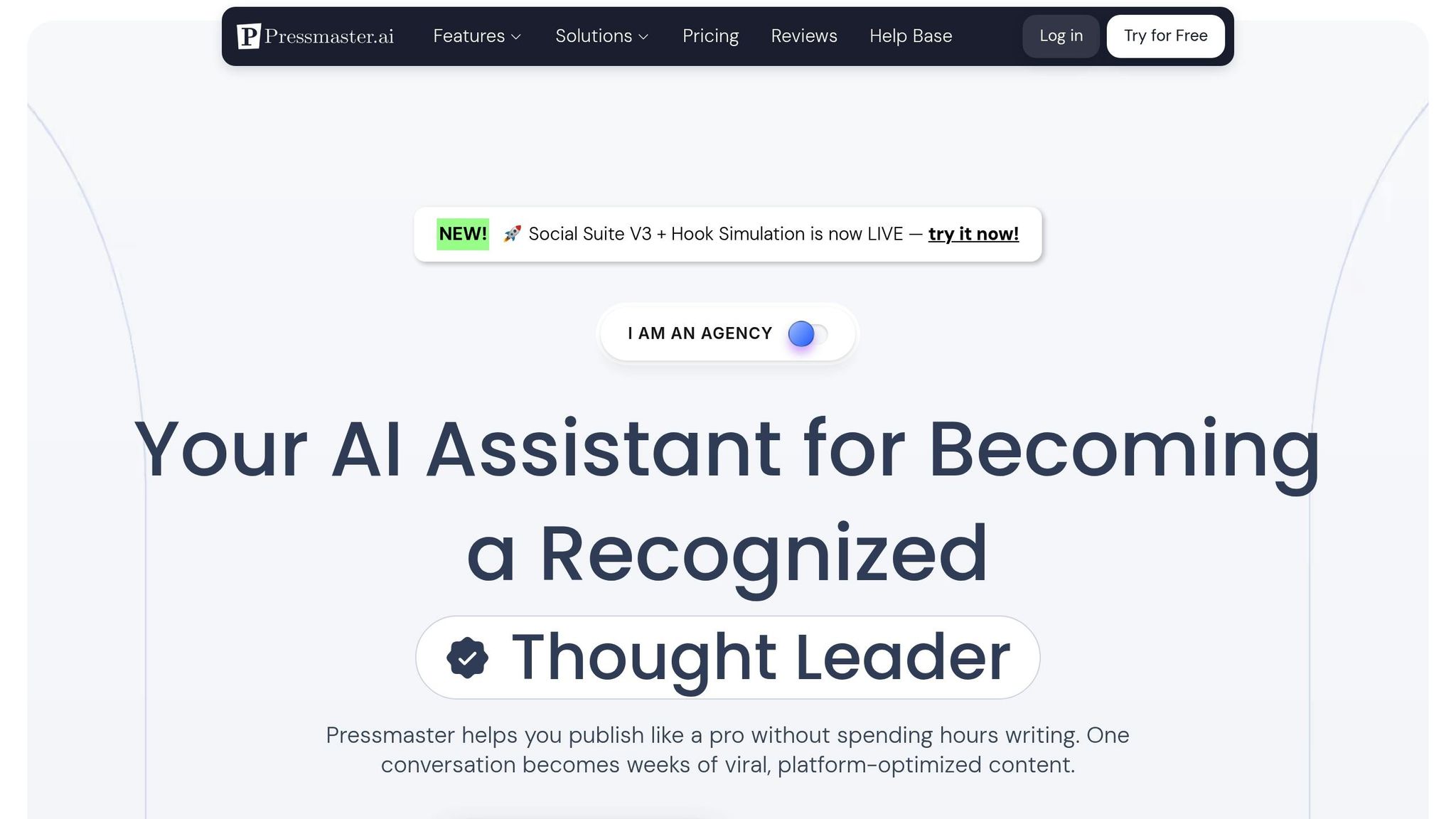
Pressmaster.ai is changing the way startups tackle content creation and public relations by blending AI-driven automation with genuine, human-centered storytelling. Designed with growing businesses in mind, the platform addresses the unique hurdles startups face when scaling content efforts while maintaining quality and staying true to their brand identity.
Key Features for Startups
At its core, Pressmaster.ai offers AI-Powered Content Generation, a feature that can turn just five minutes of conversation into weeks of content across various formats and platforms [5]. For startups juggling multiple responsibilities with limited resources, this level of efficiency is a game-changer.
The Trendmaster tool scans over 500,000 sources daily to pinpoint trends with the potential to go viral. This allows startups to craft timely, relevant content that positions them as thought leaders, staying ahead of the curve before topics become oversaturated [5].
With multi-channel publishing, the platform ensures your content reaches audiences wherever they are. Its Social Suite reformats a single article into 15+ tailored posts for different platforms, optimizing each one using engagement data from over 50,000 viral posts [5].
A unified analytics dashboard brings all your performance metrics into one place. By consolidating data from connected platforms, startups can easily track engagement, content performance, and conversion rates. This data-driven approach simplifies strategy adjustments and boosts effectiveness.
Another standout feature is brand voice replication. By analyzing your startup's natural communication style through conversations and writing samples, Pressmaster.ai ensures that all generated content feels consistent and authentic, even as production scales. These tools collectively transform the content creation process, as explored in the next section.
Simplifying PR and Content Workflows
Pressmaster.ai goes beyond individual features to streamline the entire PR and content creation process. Traditional workflows often involve juggling multiple tools, tedious manual steps, and significant time investments. By contrast, Pressmaster.ai offers a seamless, startup-friendly solution.
The platform’s interview-based content creation tackles the dreaded blank page problem. Through guided conversations, the AI extracts valuable insights from founders or team members, turning these discussions into polished articles, social media posts, and press releases. This approach makes it easy to showcase thought leadership without requiring advanced writing skills or significant time.
With automated publishing and integrations, content can go live across websites, social media, and other platforms with a single click. Tools like WordPress, Wix, and Medium integrate effortlessly, saving even more time [5].
The External Interview feature adds another layer of efficiency. Startups can collect expert insights from team members or clients via a simple link. The AI generates adaptive questions, then transcribes and enhances the content automatically [5].
Finally, press distribution capabilities provide access to premium media outlets at exclusive rates, offering startups over 400 syndication opportunities [5]. This feature helps amplify their message without breaking the bank.
Customer Success Stories
One standout example comes from a San Francisco-based fintech startup that adopted Pressmaster.ai for content and PR automation. Within just three months, the company saw a 40% increase in media mentions while cutting content production time by 25% [3]. This efficiency freed up their small marketing team to focus on strategic partnerships and business development, directly fueling their growth.
This success is part of a broader trend among Pressmaster.ai users. The platform now supports over 1,300 businesses worldwide and boasts an impressive 4.8 user rating [5]. For startups, the combination of time savings, increased output, and consistent quality offers a competitive edge that traditional methods simply can’t match.
Measuring Success: Analytics and Continuous Improvement
Tracking performance and refining strategies is what gives startups a competitive edge. Without analytics, even the strongest AI-driven content strategy can stumble.
Startups that embrace data-driven storytelling see measurable benefits. For instance, those that track performance metrics systematically are 40% more productive when using AI for content generation[1]. The secret? Knowing which metrics to prioritize and acting on the insights they provide.
Key Metrics to Track Content Performance
The best-performing startups focus on metrics that tie directly to business goals, steering clear of vanity numbers. Here's what matters most:
- Engagement rates: Metrics like click-through rates, shares, comments, and time spent on content reveal how well your AI-generated stories connect with your audience.
- Conversion rates: Whether it’s email sign-ups, demo requests, or sales, these numbers show how effectively your content drives meaningful actions. For U.S.-based startups, tracking ROI in dollars makes it easier to justify investments to stakeholders.
- Time and cost savings: AI tools can slash production costs - some startups report savings of up to 99% without sacrificing quality[5]. Measuring these efficiencies highlights the broader value of AI beyond just content volume.
- Time-on-page and bounce rates: These indicators help gauge content quality. If engagement is low, it may signal a need for more human input or better personalization.
- Audience growth metrics: Metrics like post impressions and follower growth show your content's reach. Some startups have seen 10,643% increases in impressions and 24% follower growth in under a week[5], illustrating the potential of AI when paired with engaging content.
These metrics aren’t just numbers - they’re tools to fine-tune your strategy with real-time insights.
Using Unified Analytics Dashboards
Unified dashboards simplify the chaos of managing data from multiple platforms. They consolidate performance metrics from websites, social media, email campaigns, and more into a single, actionable view.
Take Pressmaster.ai’s analytics hub as an example. It automatically tracks performance across all connected platforms, making it easier to spot trends and act quickly. The real advantage comes from cross-platform correlation - you might discover, for instance, that LinkedIn drives higher-quality leads, while Twitter is better for building awareness. Real-time tracking also allows you to amplify content that’s performing well or pivot when something isn’t working.
Unified dashboards don’t just streamline decision-making; they also simplify reporting. Instead of piecing together data from various sources, you can generate clear, comprehensive reports that highlight content performance, cost savings, and overall impact - all in formats that align with U.S. business expectations.
Continuous Optimization for Scalable Growth
Successful startups view performance data as a guide for ongoing improvement, not just a one-time scorecard. Here’s how they do it:
- A/B testing: Experimenting with different content approaches reveals what resonates most with your audience. This can help refine both AI prompts and human contributions.
- Regular audits: Analyzing which content types, topics, and formats perform best allows you to focus resources on what works while improving weaker areas.
- Balancing automation with human insight: While AI excels at high-volume production, human creativity and strategy are vital for creating truly impactful stories. Use data to pinpoint where each adds the most value.
Looking ahead, predictive analytics is reshaping content optimization. By analyzing past performance, AI tools can suggest topics, posting times, and formats likely to succeed. Some startups even identify trends weeks before they go mainstream, giving them a head start.
Iterating on successful content is key. If certain topics or formats consistently perform well, use them as a blueprint for future strategies. The ultimate goal is to create a feedback loop where performance data continuously informs your content approach. Over time, your AI tools will learn to generate material that aligns even more closely with your audience’s needs and your business goals.
When scaling, let the data guide you. If analytics show that video content outperforms text posts, invest in AI video tools. If a specific audience segment responds better to tailored messaging, create targeted content streams. Thoughtful, data-driven expansion ensures your strategy grows sustainably.
Conclusion: Growing Smarter with AI-Powered Storytelling
Startup marketing has entered a new era. Today, 87% of marketers use AI for content creation, making it clear that for startups juggling tight budgets and lofty goals, AI-powered storytelling is no longer optional - it’s becoming a must-have for growth and survival[6].
The numbers speak for themselves: businesses that integrate AI into their marketing processes see a 15–20% boost in ROI[2]. But the real magic lies in how AI helps startups punch above their weight. By automating repetitive tasks and freeing up time for creative strategy, startups can build a competitive edge that’s tough for traditional approaches to replicate.
Take Pressmaster.ai, for example. This platform reshapes content creation by automating tasks like identifying trends, publishing across multiple channels, and replicating your brand’s voice. It doesn’t stop there - its unified analytics offer real-time insights across platforms, eliminating the need for juggling spreadsheets or disconnected tools. Instead, you get actionable data that tells you exactly how your content is performing everywhere it matters.
The real game-changer, though, comes from blending AI with human creativity. Startups that succeed are the ones that scale their content without losing their unique voice. Pressmaster.ai’s brand voice replication ensures that even AI-generated content stays true to your style, solving a major challenge: keeping your storytelling authentic and consistent as you grow.
And let’s not overlook the power of multi-modal content atomization. With tools like these, a single piece of content can be effortlessly transformed into LinkedIn posts, video scripts, press releases, and social media campaigns - each tailored for its specific platform. This approach delivers a 3–4x higher ROI compared to constantly creating new content from scratch[4].
The startups poised to thrive are those that see AI as a partner, not a replacement. AI takes care of the heavy lifting - content production, analytics, and optimization - while human insight drives the big-picture strategy that turns content into measurable growth.
A practical way to start? Try a 30-day AI content sprint. Use this time to audit your current processes, implement new tools, produce content, and analyze results. The real transformation happens when you commit to continuous improvement, using data to refine your approach and double down on what works.
For U.S. startups, where direct and authentic communication is the norm, AI offers a way to scale that voice without sacrificing quality. When you can deliver content that feels personal and rivals larger competitors in reach and impact, you’ve unlocked a powerful growth engine.
AI-powered storytelling isn’t just about working smarter - it’s about building a scalable, data-driven content strategy that can turn startups into market leaders. The question isn’t whether to embrace AI; it’s how fast you can make it a core part of your approach. The future belongs to those who can tell compelling stories, adapt quickly, and measure success with precision. The tools are here. The time is now.
FAQs
How can AI tools help startups scale content production while keeping their brand consistent?
AI tools are a game-changer for startups aiming to ramp up content production while staying true to their brand identity. These tools can analyze your brand’s tone, style, and messaging, creating content that matches your voice perfectly. The result? Consistency across all platforms without sacrificing authenticity.
On top of that, AI takes care of time-consuming tasks like editing, formatting, and SEO optimization. This means your team can shift their focus to creative strategies and big-picture ideas. Even as your startup expands, you can maintain a steady flow of polished, on-brand content with ease.
How can AI help startups save costs and boost ROI through smarter content creation?
AI-driven content creation gives startups a budget-friendly way to expand their marketing efforts without the need to grow their team. By automating tasks like generating, editing, and optimizing content, startups can create quality materials more quickly and at a fraction of the cost.
On top of that, AI tools can analyze performance data to fine-tune content for specific platforms and audiences. This means better engagement and more impactful results. With this kind of targeted strategy, every piece of content works harder to boost return on investment (ROI) while increasing growth and brand awareness.
How can AI-powered storytelling help startups in the U.S. engage their audience and create personalized content?
AI-powered storytelling gives startups the ability to create content that feels personal and resonates with their audience. By analyzing preferences, behaviors, and trends, this technology pinpoints what truly connects with your target market. The result? Messages that hit the mark and build meaningful connections.
With AI tools in play, startups can simplify the content creation process and focus on crafting stories that leave a lasting impression. Whether it’s a compelling blog post, an engaging social media campaign, or a well-timed email, AI helps ensure your storytelling speaks directly to the unique interests of your U.S.-based audience, boosting engagement and fueling growth.
Related Blog Posts








Sign Up for our Pressmaster Newsletter
Sign up for our Pressmaster.ai newsletter to get instant alerts on trending topics, ensuring you stay ahead in your field with the latest insights and updates.


.avif)
.png)

.avif)


7 Viral Patterns That Drove 10,643% Growth
Turn natural conversations into content gold, make every insight count, and drive real conversations.

Please fill out the form to get our Viral Cheat Sheet


How to Become a Thought Leader in 6 Easy Steps
Increase your visibility, establish authority, and conquer your market with minimal effort.

Please fill out the form to get our PDF Checklist
