
AI Writing Prompts to Generate SEO Friendly Blog Titles and Headlines
Your blog headline is more than just a title - it’s the key to getting noticed. Research shows that 80% of readers stop at the headline, and a well-optimized title can boost click-through rates by up to 20%. But creating SEO-friendly headlines that balance search engine needs with reader appeal isn’t easy. That’s where AI-powered writing prompts come in.
AI tools like Pressmaster.ai simplify the process by generating optimized headlines in seconds. These tools analyze trends, integrate keywords, and craft titles tailored to your audience. From listicles to curiosity-driven titles, AI can help you create attention-grabbing, high-ranking headlines for any industry.
Key Takeaways:
- AI writing prompts save time and eliminate guesswork in headline creation.
- Tools like Pressmaster.ai analyze trends and suggest SEO-friendly titles.
- Popular formats include listicles, question-based titles, and benefit-driven headlines.
- AI-generated titles can increase click-through rates by up to 20%.
- Custom prompts ensure headlines match your brand and audience needs.
How to Generate SEO Blog Titles from Keywords Using AI Agent
How AI Writing Prompts Enhance SEO Blog Title Creation
AI writing prompts act like high-tech trendspotters, constantly scanning massive amounts of data to figure out what’s grabbing attention and what your audience is eager to read. These tools dig into search patterns, competitor content, and even social media chatter to uncover topics with real engagement potential. They also pull insights from platforms like Google Trends and specialized keyword databases, making it easier to create titles that resonate.
Take tools like Pressmaster.ai, for example. With its Trendmaster feature, it scans over 500,000 sources to find trending topics and ideas with viral potential. As Pressmaster.ai puts it:
"Trendmaster scans 500,000+ sources to find hot topics your audience is already interested in." [1]
AI doesn’t stop at identifying trends - it goes deeper by analyzing search behavior and user intent. Whether someone is looking for information, shopping, or just browsing, AI-generated titles can be tailored to meet their needs. For instance, if someone searches for "best running shoes", they’re likely ready to buy. An AI prompt might suggest a title like "Top 10 Running Shoes That Won't Break Your Budget in 2025", which is far more targeted than a generic headline.
Another major strength of AI writing tools is their ability to customize for specific industries. By incorporating sector-specific keywords, jargon, and audience preferences, these tools can craft headlines that speak directly to niche markets. For example, a prompt asking for "five engaging titles about indoor herb gardening for beginners" could generate a variety of creative and relevant options tailored to that audience.
AI also uses semantic keywords and Latent Semantic Indexing (LSI) to improve the depth and relevance of headlines. Instead of focusing solely on one primary keyword, the AI includes related terms that help search engines understand the broader context. For instance, compare a basic title like "Vegan Recipes" to a more detailed one like "Easy Vegan Recipes for Plant-Based Beginners: Dairy-Free Comfort Food Ideas." The latter naturally includes multiple related search terms, making it more effective for both search engines and readers.
One of the standout features of AI writing prompts is their ability to optimize headlines using real data. These tools consider metrics like search volume, competition, and historical click-through rates to suggest titles with built-in performance insights. Research shows that 60% of marketers now use AI tools for content creation, with headline generation being a top use case [3]. Even more compelling, AI-generated headlines have been found to boost click-through rates by up to 20% compared to manually written ones [5].
Another game-changer is the iterative refinement process. Instead of spending hours tweaking a single headline, you can use AI to generate dozens of options in seconds. From there, you can test them, analyze performance data, and refine your prompts to improve results over time.
AI tools also excel at identifying content gaps. By comparing your existing blog content to competitors, they can pinpoint topics you’ve missed and suggest high-potential keywords and headline formats. This ensures your titles not only stand out but also address unmet needs in the market.
Essential AI Writing Prompts for SEO-Friendly Blog Titles
Crafting SEO-friendly blog titles isn't just about stringing words together; it's about creating headlines that resonate with readers and perform well in search rankings. To achieve this, you need to use specific AI prompts that guide the process. By including your target keyword, desired tone, character limits, and audience details in your prompts, you can turn basic AI suggestions into attention-grabbing headlines that both search engines and readers will appreciate.
Listicle prompts are a great starting point because they cater to readers' preference for structured, easy-to-skim content. These prompts should specify the number format and highlight a clear benefit or theme. For example, you might say: "Generate five SEO-friendly listicle titles under 60 characters for healthy breakfast ideas aimed at busy professionals." This could result in headlines like "10 Quick and Healthy Breakfast Ideas for Busy Mornings," which immediately conveys value and structure.
Listicle prompts are flexible. You can adjust the number, target audience, or add modifiers like "budget-friendly" or "2025" to tailor the results. They work particularly well for content that organizes information into tips, tools, or step-by-step guides.
Question-based headline prompts are another effective tool because they align with how people search online - many queries start with a question. Frame these prompts around common questions your audience might ask. For instance: "Suggest three SEO-optimized blog titles in the form of questions about remote work productivity, targeting professionals struggling with home office distractions." This could generate a title like "How Can You Stay Productive While Working Remotely?" - a direct match for what users may type into Google.
These prompts shine when you're creating educational content, troubleshooting guides, or FAQs. They’re especially useful for long-tail keywords and voice search optimization since people often phrase voice queries as questions.
Benefit-driven prompts focus on what readers gain. These prompts are perfect for persuasive content, emphasizing outcomes like saving money, improving skills, or achieving goals. For example: "Create three SEO-friendly blog titles that emphasize the benefits of using electric vehicles for cost-conscious families." This might yield results like "5 Ways Electric Vehicles Save You Money and Time Every Month."
In January 2025, Brafton demonstrated the power of such prompts by using ChatGPT to generate SEO-friendly title tags for a client in the digital marketing sector. By specifying the keyword "digital marketing strategies" and a 60-character limit, the client experienced a 22% jump in organic click-through rates over three months [5]. The campaign, led by Emily Carter, included A/B testing of five AI-generated options.
Curiosity-gap prompts are designed to spark interest by withholding just enough information to entice readers to click. These prompts should encourage the AI to tease insights while staying relevant to your keyword. For instance: "Write three SEO-optimized blog titles that create curiosity about the future of AI in marketing, focusing on surprising developments." A result like "The Surprising Ways AI Will Transform Marketing in 2025" piques interest without overpromising.
These titles work well for storytelling, case studies, and trend-focused content. However, it’s important to balance intrigue with honesty - clickbait tactics can backfire if the content doesn’t deliver.
Industry-specific prompts require more customization but provide highly targeted results. These prompts should include audience pain points, sector jargon, and niche keywords. For instance: "Generate three SEO-friendly blog titles for a real estate blog targeting first-time homebuyers worried about current market conditions." This could lead to headlines like "7 Essential Tips for First-Time Homebuyers in Today's Market."
In March 2024, Team-GPT helped a fitness blog optimize its headlines using prompts like "Generate 10 SEO-friendly listicle titles for gym exercise tips targeting beginners." The blog reported a 17% boost in search impressions and a 12% rise in keyword rankings after implementing these AI-generated titles [3].
For industry-specific prompts, focus on audience challenges and desired outcomes. This level of detail ensures the AI generates headlines that speak directly to your audience’s needs.
Semantic keyword integration is another strategy to elevate your prompts. Instead of focusing on just one keyword, include related terms to broaden search relevance. For example: "Create five blog titles about vegan cooking that naturally include related terms like plant-based, dairy-free, and sustainable eating." This approach helps your content rank for multiple queries while staying on-topic.
To maximize results, combine different prompt types. For instance: "Generate five question-based, SEO-friendly blog titles about digital marketing automation for small business owners, emphasizing cost savings and time efficiency." This produces headlines that are not only SEO-optimized but also highly relevant to your audience.
Testing and refining your prompts is key to long-term success. Request multiple variations for each headline type and analyze performance data to see what resonates with your audience. According to Brafton, optimized title tags can boost click-through rates by up to 20% compared to generic headlines [5]. Adjust your prompts based on these insights to continually improve your results.
AI-generated SEO prompts can significantly reduce the time it takes to create effective headlines - by as much as 60-80%, according to Search Engine Journal [7]. By starting with these foundational formats and customizing them for your audience, you can develop a system that consistently delivers high-performing blog titles.
Leveraging Pressmaster.ai for AI-Powered PR Content Creation
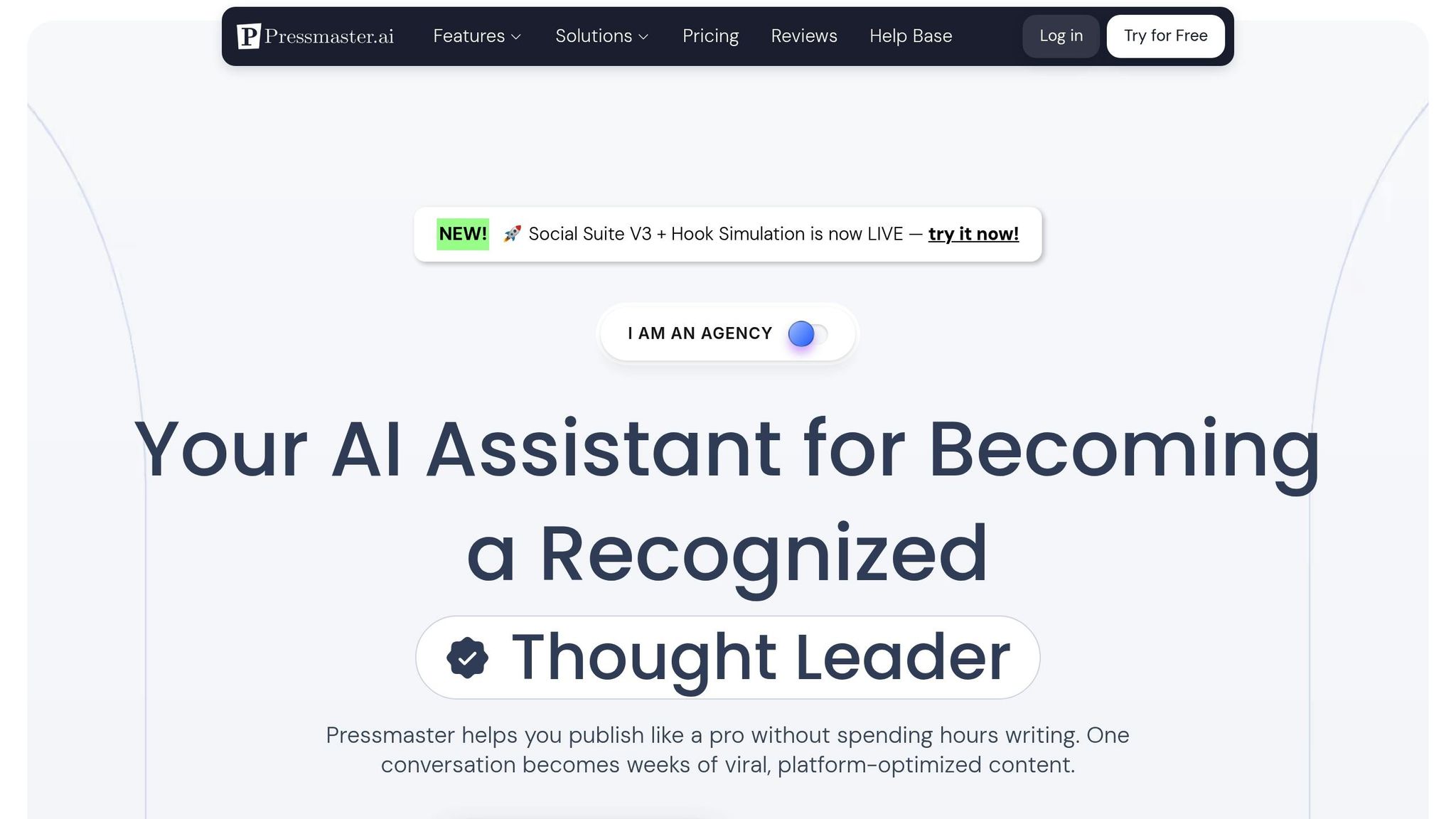
Pressmaster.ai takes the guesswork out of creating attention-grabbing, SEO-friendly headlines. By combining proven AI writing prompts with advanced tools for headline optimization and performance tracking, the platform offers a streamlined solution for content creators looking to achieve measurable results. It doesn’t just generate headlines - it builds a complete system for crafting titles that resonate with readers and perform well in search rankings.
Trendmaster is at the heart of Pressmaster.ai's headline creation process. This tool identifies trending topics relevant to your niche, eliminating the need to rely on hunches about what your audience might want. Instead, Trendmaster provides data-driven suggestions tailored to your industry, helping you align your headlines with current search demand while staying consistent with your brand's identity.
The platform’s AI-powered headline creation takes these trends and transforms them into high-performing titles. Whether you ask it to “Generate five question-based headlines about remote work productivity” or something else, the AI analyzes search trends, effective headline structures, and emotional triggers to deliver engaging, SEO-optimized options. What makes Pressmaster.ai stand out is its ability to maintain your brand’s voice, ensuring that every headline feels authentic and trustworthy - key factors in building credibility with both readers and search engines.
Pressmaster.ai doesn’t stop at headline generation. Its advanced headline testing feature allows you to simulate audience responses before publishing. By analyzing factors like emotional impact and scroll behavior, you can compare multiple headline options and select the one most likely to succeed. The analytics dashboard tracks key metrics like click-through rates, impressions, and search rankings, giving you the insights needed to refine your strategy over time.
Real-world results back up the platform’s capabilities. Wesley Pitts, Founder at KnoxBots and TerraSYNC, saw an impressive 10,643% increase in post impressions and a 24% boost in followers within a week of using Pressmaster.ai. He shared:
"My first posts with Pressmaster were incredible. 10,643% increase in post impressions and 24% increase in followers in less than a week. Amazing results!"
Similarly, Ethan Bonar, CEO at CFO Family, experienced a dramatic improvement in engagement:
"Hendrik - I had to call you here. Two posts using your system got me over 6,000 impressions on LinkedIn. My own post never resonated this well. Thanks guys."
These testimonials highlight how Pressmaster.ai combines AI-driven insights with practical tools to deliver exceptional results.
The platform also adapts headlines for different social media platforms. For instance, LinkedIn favors professional, benefit-oriented titles, while Twitter thrives on curiosity-driven headlines that spark engagement. Pressmaster.ai automatically adjusts your headlines to suit each platform’s unique formatting and algorithm, saving you time and effort. Its Social Suite can even transform a single piece of content into 15+ posts, each tailored for maximum impact based on insights from over 50,000 viral posts.
For agencies managing multiple clients, Pressmaster.ai offers multiple workspaces with customizable settings. Each workspace can reflect a specific brand voice, industry focus, and headline style, ensuring that every client’s needs are met. The platform’s white-label capabilities allow agencies to deliver polished, professional content under their own branding, free of any third-party logos or mentions.
Another standout feature is the external interview functionality, which extends headline creation beyond your expertise. By sharing a link with team members, clients, or industry experts, you can gather insights that the platform uses to generate optimized headlines incorporating expert opinions and trending terminology.
Finally, the AI Strategizer provides content strategy recommendations based on over one million viral articles and proven frameworks. It suggests effective angles and headline approaches that have historically performed well in your industry, offering actionable guidance to enhance your content.
Pressmaster.ai simplifies the entire content creation process - from identifying trends to analyzing performance. Its pricing starts at just $12 per month for the Starter plan, making it accessible for individual creators and small businesses. Higher-tier plans unlock features like unlimited Social Suite access, press distribution discounts, and advanced analytics for agencies and larger teams.
With over 1,400 thought leaders and 150+ agencies already on board, Pressmaster.ai has proven itself as a go-to solution for crafting SEO-friendly headlines that deliver tangible results. By blending trend insights, authentic voice replication, and detailed performance tracking, it equips content creators with the tools they need to thrive in today’s competitive digital landscape.
Practical Tips for Maximizing Results with AI-Generated Headlines
Building on earlier insights, let's dive into some actionable ways to get the most out of AI-generated headlines. Combining AI's speed and precision with thoughtful human oversight can turn raw suggestions into headlines that rank well and truly resonate with your audience.
Start with strategic keyword placement to boost your SEO efforts. Place your primary keyword at the beginning of the headline to signal relevance to search engines. When reviewing AI-generated options, look for headlines that naturally weave your main keyword into the first few words. For example, instead of "The Ultimate Guide to Understanding SEO Strategies", go with "SEO Strategies: The Ultimate Guide to Better Rankings." This small tweak keeps your headline both keyword-focused and reader-friendly.
Optimize character count for better visibility in search results. Keep headlines between 50-60 characters to ensure they display fully without being cut off with "..." - a common issue that can lower click-through rates[4][5]. Always double-check that your headline fits within this range to maximize its impact.
A/B testing is key to finding the best-performing headline. A 2023 Brafton report found that A/B testing can improve click-through rates by up to 28% when headlines are optimized for both SEO and user engagement[5]. Run tests comparing two or three AI-generated variations, focusing on metrics like click-through rates and bounce rates. Allow at least a week for testing to gather meaningful data, then implement the winner across your content.
Maintain brand voice consistency by carefully reviewing AI-generated headlines. While AI is great at structuring SEO-friendly options, it often misses the subtle tone that defines your brand. After generating headlines, compare them to your brand guidelines. Adjust wording if needed to ensure the final version aligns with your voice while retaining its SEO value.
Prioritize clarity over cleverness when finalizing headlines. AI can sometimes produce options that are technically optimized but confusing for your audience. Ensure your headlines are straightforward and easy to understand at a glance. Avoid jargon unless your audience expects it, and steer clear of any phrasing that might mislead or confuse readers.
Generate multiple options to give yourself a variety of choices. Instead of settling for the first AI suggestion, create 8-10 variations for each piece of content. This allows you to explore different angles - some might highlight benefits, others might pose a question, and some might create curiosity gaps.
Leverage competitor gap analysis to uncover opportunities. Use AI tools to analyze what keywords and headline styles your competitors are neglecting. Then, craft headlines that fill those gaps[3]. This approach helps you capture overlooked traffic and establish authority in less competitive areas.
Here's a quick comparison of AI-generated headlines versus manually created ones:
| Aspect | AI-Generated Headlines | Manually Created Headlines |
|---|---|---|
| Speed | Instant generation of multiple options | Takes 15-30 minutes per headline |
| SEO Optimization | Consistently integrates keywords | Depends on writer's SEO knowledge |
| Scalability | Can generate dozens at once | Limited by time and capacity |
| Brand Voice | Needs editing to align | Naturally reflects brand tone |
| Creativity | May follow predictable patterns | Often more nuanced |
| Data Integration | Easily incorporates trending topics | Requires manual research |
| Consistency | Uniform quality with good prompts | Varies by writer and context |
Track performance over time to refine your strategy. Monitor how well your headlines perform post-publication and use the data to identify patterns. A 2024 survey by Team-GPT revealed that 68% of marketers using AI for headline generation saw improved search rankings within three months[3].
Refine your prompts to get better AI output. Instead of vague instructions like "create a headline", be specific. For example, try: "Generate five question-based headlines under 55 characters about remote work productivity for HR managers, including the keyword 'employee engagement.'" This level of detail helps AI deliver more targeted, high-quality suggestions.
Incorporate emotional triggers to make your headlines stand out. Look for ways to add curiosity, urgency, or benefit-driven language to AI-generated options. For instance, "5 SEO Mistakes Killing Your Traffic (And How to Fix Them Today)" is much more engaging than "Common SEO Errors and Solutions" because it promises immediate value and sparks curiosity.
Adapt headlines for different platforms to maximize their reach. What works on LinkedIn might need tweaking for Twitter or your blog. While AI can help generate platform-specific variations, human judgment ensures each version stays true to your message and fits the platform's audience and algorithm.
1. Listicle Titles
Listicle titles are a go-to format for creating SEO-friendly headlines because they offer readers a clear sense of value. In fact, BuzzSumo analyzed 100 million headlines and found that listicles are among the most shared formats on social media. Similarly, research by Conductor revealed that headlines featuring numbers generate 36% more clicks compared to those without[6].
The magic of listicle titles lies in their simplicity and clarity. A numbered headline immediately tells readers what they’re getting, which can lead to better click-through rates and improved search rankings.
Number-Driven Headlines for Specific Industries
AI tools excel at crafting listicle titles tailored to specific industries and audiences. To get the best results, create prompts that include your target keyword, address your audience’s specific concerns, and follow a clear numerical structure. For instance, a headline like "7 Must-Try Social Media Strategies for Small Businesses" not only highlights value but also grabs attention with its organized, easy-to-digest format.
While industry-focused headlines are effective, another approach that works well is emphasizing practical, actionable value.
Practical and Safety-Focused Headlines
Expanding on the idea of targeted listicles, focusing on safety and actionable tips can provide readers with immediate, useful insights. For example, a headline like "5 Essential Safety Tips for Homeowners This Winter" combines urgency, specificity, and a clear benefit. These types of headlines are also perfect for featured snippets[6]. The numbered format makes it easy for search engines to extract key points, improving both visibility and click-through rates.
The effectiveness of this strategy is supported by real-world data. In January 2024, Yoast reported success with AI-generated headlines like "How To Start Your Indoor Herb Garden: 5 Easy Steps" and "Transform Your Kitchen with These 7 Easy-to-Grow Herbs." Both ranked in Google’s top 10 search results for their target keywords within just 30 days[6].
Both industry-specific and practical listicle titles show how well-crafted AI prompts can produce headlines that not only attract attention but also engage readers.
To maximize results, tailor your prompts to your audience’s needs and challenges. Instead of asking for generic titles, try something more specific, like: "Generate listicle headlines for homeowners concerned about winter safety, using numbers and actionable language." This approach helps tools like Pressmaster.ai create headlines that resonate with your audience while meeting SEO best practices.
2. Question-Based Headlines
Question-based headlines align closely with how people phrase their search queries - like, "How can I improve my website's ranking?" This style not only grabs the attention of search engines but also encourages users to click. In fact, an analysis by Backlinko of 5 million Google search results revealed that question-based headlines are 2.5 times more likely to appear in featured snippets compared to other headline types[3]. This visibility can significantly expand your content's reach and boost its credibility. Let’s dive into how addressing specific problems in your headlines can make them even more engaging.
Targeted Problem-Solving Questions
One of the most effective ways to create question-based headlines is by addressing specific challenges your audience faces. Instead of crafting broad or vague questions, focus on precise pain points that resonate with your readers and align with real search trends. For example, a headline like "How Can Small Businesses Save Money on Marketing?" speaks directly to a common concern and delivers tangible value.
A great example of this approach comes from HubSpot's January 2024 campaign, where they used AI-generated question-based headlines to target small business owners. Their headline, "How Can Small Businesses Save Money on Marketing?" resulted in a 40% increase in organic traffic and a 28% higher click-through rate compared to previous posts with more generic, statement-based headlines. Emily Carter, HubSpot’s Content Strategy Lead, tracked these results over three months, demonstrating how specificity in headlines can outperform traditional formats[2].
What made this headline so effective? It zeroed in on a key concern - cost savings - and promised actionable solutions. Readers didn’t just see a question; they saw a potential answer to a pressing problem. This level of focus encourages clicks and builds trust with your audience.
Industry-Specific Trend Questions
Another powerful tactic is to craft headlines that address current trends in your industry. These types of questions attract timely search interest and position your content as a leading resource for up-to-date insights.
Ahrefs demonstrated this strategy in June 2023 when they updated a headline from "Best SEO Tools" to "What Are the Best SEO Tools for Beginners?" This subtle yet strategic shift to a question format led to a 65% increase in organic traffic and a 32% boost in engagement rates. Tim Soulo, Ahrefs’ Head of Content, spearheaded this optimization effort, proving how a targeted question can breathe new life into existing content[3].
The success came from narrowing the focus to a specific audience - beginners - within a broader topic. This approach not only helped the content rank for less competitive, more targeted keywords but also maintained its relevance for general searchers.
To make the most of question-based headlines, start with words like "How", "Why", "What", or "When." These words signal that your content provides clear, actionable answers. HubSpot discovered that blog posts with question-based headlines saw 23% more social shares than those with statement-based headlines, showing their appeal isn’t limited to search engines - it extends to social media engagement as well[2].
When using AI tools to craft headlines, include clear audience details in your prompts. For example, ask for "question-based headlines for e-commerce business owners focused on customer retention, with an emphasis on actionable strategies." This specificity ensures the AI generates headlines that resonate with your audience while maximizing SEO potential.
3. Benefit-Driven Headlines
Benefit-driven headlines are all about highlighting clear advantages that directly address the reader's needs. Instead of just describing a topic, they promise specific results or solutions. This approach grabs attention by offering immediate value or resolving pressing problems.
The real power of these headlines lies in their ability to align with what users are searching for. For example, if someone is looking to improve website speed, they’re not interested in vague advice - they want actionable steps. A headline like "Speed Up Your Website: Cut Loading Time by 50% in 30 Minutes" speaks directly to that need, offering a measurable, time-bound benefit.
This isn’t just theory; there’s data to back it up. According to a 2024 analysis by Search Engine Journal, blog posts with benefit-driven headlines achieved an 18% higher organic click-through rate compared to those with neutral or generic titles[7]. The reason? These headlines clearly communicate value, helping readers decide quickly if the content will address their challenge.
There are two key strategies for crafting benefit-driven headlines: offering immediate value and solving specific problems.
Immediate Value Headlines
These headlines promise quick, actionable results that readers can achieve without a huge time investment. They cater to the modern audience’s need for efficiency and clarity, often including specific timeframes or measurable outcomes.
For instance, HubSpot ran a campaign in January 2024 with headlines like "Automate Your Marketing: Save 10+ Hours a Week with These Tools." This approach led to a 22% increase in click-through rates and a 17% boost in session duration[7]. The promise of saving time resonated strongly with their audience, making the content irresistible.
Problem-Solution Benefit Headlines
This approach focuses on identifying a specific pain point and offering a direct solution. By addressing challenges head-on, these headlines build an emotional connection and position your content as the answer readers are looking for.
Take Brafton’s March 2025 campaign for an e-commerce client as an example. They used headlines like "Increase Your Online Sales with These Proven E-Commerce Strategies", crafted and optimized with ChatGPT. This resulted in a 15% rise in organic traffic and a 12% uptick in conversion rates[5]. These headlines worked because they tackled the audience’s main concern - boosting sales - while promising actionable solutions.
To make benefit-driven headlines even more effective, focus on being specific, measurable, and realistic. Instead of vague promises like "improve your business", aim for something like "Increase Customer Retention by 25%" or "Reduce Customer Service Response Time to Under 2 Hours." Specific promises not only attract clicks but also build trust when the content delivers on those claims. By refining your AI prompts to reflect these clear, measurable benefits, you can seamlessly integrate this strategy into your broader content optimization efforts.
4. Curiosity-Gap Titles
Curiosity-gap titles take the concept of benefit-driven headlines a step further by tapping into readers' natural sense of intrigue. These headlines hint at something compelling without giving away all the details, creating a sense of mystery that encourages clicks. This approach is rooted in the "information gap theory", which suggests that encountering incomplete information creates a tension that people feel compelled to resolve by seeking out the missing details.
And it’s not just theory - there’s hard data to back it up. A study by Outbrain found that curiosity-gap headlines can boost click-through rates by as much as 927% compared to more straightforward titles, as long as the content delivers on the promise of the headline[8]. Publishers like BuzzFeed and Upworthy have mastered this technique, using it to build massive audiences by crafting headlines that tease just enough to spark interest without veering into clickbait territory[8]. The key is finding the sweet spot between intrigue and transparency.
1. Teaser-Based Curiosity Headlines
Teaser-based headlines are all about offering just enough to pique interest while holding back the full story. They’re especially effective for content that reveals surprising insights, debunks myths, or shares little-known secrets.
Phrases like "You Won't Believe What...", "The Surprising Truth About...", or "What Most People Don't Know About..." are commonly used to signal that something unexpected or exclusive is waiting for the reader. For example, a headline like "You Won't Believe What These Small Businesses Did to Double Their Revenue in 6 Months" grabs attention by promising surprising strategies without giving away the specifics[6][7].
To create teaser-based headlines with AI tools, focus on prompts that emphasize mystery and surprise. For instance: "Generate five curiosity-gap headlines for a travel blog about hidden destinations in the US, using phrases that tease unexpected discoveries without revealing the locations." This ensures the headlines maintain an air of intrigue while targeting the right audience and keywords.
2. Question-Hook Curiosity Headlines
Question-hook headlines take curiosity a step further by posing questions that readers feel compelled to answer. These often challenge conventional thinking or address common problems in a way that suggests surprising solutions.
For example, a headline like "The Surprising Ingredient Missing from Most Healthy Breakfasts" works because it implies that readers might be overlooking something essential, prompting them to wonder, "What am I missing?" and "Why haven’t I heard about this before?"[6][7]
To make question-hook headlines effective, focus on genuine issues your audience cares about while hinting that the answer might defy expectations. Tools like Pressmaster.ai can analyze trends and user behavior to craft these headlines, ensuring they resonate with your audience. A headline that creates curiosity needs to deliver on its promise, offering valuable insights or actionable advice that satisfies the reader’s need for answers.
"Hook Engineering & Performance Simulation: Craft with precision. Simulate audience response, emotional triggers, and scroll behavior before you publish." - Pressmaster.ai[1]
Modern AI tools like Pressmaster.ai excel at creating curiosity-gap titles by analyzing what’s trending and what readers are searching for. The goal isn’t just to generate clicks - it’s to attract readers who find real value in your content. But remember, while curiosity-gap titles can drive traffic, they must be backed by high-quality content to avoid disappointing your audience and increasing bounce rates.
5. Industry-Specific Headlines
Creating headlines that resonate with a specific industry audience requires more than just a catchy phrase. It demands an understanding of the field's unique language, challenges, and trends. By tailoring headlines with industry-relevant keywords, you can address the specific needs of professionals and consumers in that sector. This approach not only grabs attention but also boosts click-through rates and search rankings. According to Search Engine Journal, blog titles featuring industry-specific keywords can improve organic click-through rates by as much as 20% [7].
Healthcare Technology Headlines
In healthcare, decision-makers focus on improving patient care, meeting regulatory requirements, and enhancing efficiency. Headlines targeting this audience should reflect these priorities while using the right industry terminology.
For example, a headline like "How AI-Powered Scheduling Improves Patient Care in U.S. Clinics" works well. It combines a trending topic (AI) with a specific healthcare challenge and targets a clear audience - American clinics.
When crafting AI prompts for healthcare headlines, it’s essential to include details about the audience and current industry trends. A useful prompt might be: "Generate 5 SEO-friendly blog headlines for a U.S. healthcare technology company targeting clinic managers. Focus on telemedicine, patient engagement, and regulatory compliance." Using U.S.-specific terms like "HIPAA-compliant telehealth solutions" or "patient engagement strategies for U.S. healthcare providers" ensures relevance to American professionals and their unique challenges.
This tailored approach aligns with broader strategies for AI-powered headline generation, demonstrating how understanding industry nuances can create headlines that resonate deeply with the target audience.
E-commerce and Retail Headlines
For e-commerce professionals, the focus is on practical concerns like boosting sales, reducing acquisition costs, and adapting to seasonal trends. Headlines in this sector should directly address these priorities while integrating current technology and marketing strategies.
Take this example: "Boost Your Online Store Sales: 7 AI-Driven Marketing Strategies for U.S. Retailers." It appeals to e-commerce professionals by promising measurable results, clearly defining the audience, and leveraging trending technologies.
To make these headlines even more impactful, include terms that resonate with the industry, such as "conversion rates", "cart abandonment", "mobile optimization", and "payment gateways." Seasonal references like "Black Friday marketing strategies" can add further relevance.
AI tools like Pressmaster.ai are particularly helpful in generating such headlines. These tools analyze trending topics and audience preferences, making it easier to craft headlines that align with current market demands. By incorporating metrics and platform-specific terminology, you can create headlines that not only attract attention but also engage the right audience.
As content marketing moves toward hyper-personalization, businesses increasingly rely on AI to produce headlines that reflect the latest trends and audience needs. Regularly updating AI prompts with emerging topics, regulations, or industry shifts ensures your headlines remain impactful and relevant.
Conclusion
AI writing prompts have reshaped how content creators approach SEO-friendly blog titles and headlines. What once took hours can now be done in minutes, giving teams more time to focus on strategy and execution. With improved keyword integration, headlines are no longer just attention-grabbing - they’re also strategically optimized for search engines. By analyzing search trends, competitor content, and popular topics, AI-generated headlines incorporate LSI keywords and semantic variations to boost visibility. This data-driven approach replaces guesswork with proven SEO practices.
AI tools also offer industry-specific customization, tailoring headline suggestions to match the language and concerns of your audience. This directly impacts engagement and click-through rates. Take Pressmaster.ai, for example - it integrates industry insights into every headline, ensuring relevance and resonance.
Pressmaster.ai simplifies the entire process by combining headline generation with a comprehensive content strategy. Its AI Strategizer, trained on over 1 million viral articles, doesn’t just create headlines - it crafts complete content angles that connect with your audience. Meanwhile, the Trendmaster feature identifies emerging topics weeks before they gain traction, ensuring your headlines stay ahead of the curve.
One common concern with AI-generated content is maintaining a brand’s unique voice. Pressmaster.ai addresses this by replicating your communication style, ensuring headlines feel authentic to your brand rather than generic or robotic.
Scalability and consistency are other standout benefits. Teams can maintain a uniform tone and quality across large volumes of content while producing headlines that remain fresh and engaging. Built-in tools like fact-checking and plagiarism detection add another layer of quality assurance, ensuring every headline meets professional standards.
AI also enables instant generation of multiple headline variations, making experimentation seamless. A/B testing, performance analysis, and iteration become part of the workflow, helping you fine-tune headline styles that truly resonate with your audience.
The real power lies in blending AI’s efficiency with human creativity. Use AI to handle technical SEO tasks and generate options, then apply your expertise in brand voice, audience understanding, and strategic goals to refine the final results. This hybrid approach brings together the best of automation and human insight.
As search algorithms evolve and the competition for attention grows, AI-powered headline generation offers a reliable edge. The ability to quickly adapt to trends, leverage emerging keywords, and consistently produce high-quality headlines sets the stage for long-term SEO success.
FAQs
How can AI-generated headlines boost my blog's SEO compared to writing them manually?
AI-powered tools can play a big role in improving your blog’s SEO by crafting headlines that are both attention-grabbing and search-engine friendly. By analyzing data like trending keywords, audience behavior, and niche-specific terms, these tools help create titles designed to perform well in search rankings.
On top of that, AI saves you time by offering multiple headline suggestions tailored to your content and audience. This means you can consistently produce titles that not only draw readers in but also follow SEO guidelines, boosting traffic to your blog.
How can I ensure AI-generated headlines match my brand's voice and tone?
To make sure AI-generated headlines match your brand's voice and tone, start by defining your brand's personality and messaging style. Think about key traits - are you aiming for a formal or casual tone? Playful or professional? Having these details nailed down provides a solid foundation.
When using AI tools like Pressmaster.ai, tailor your prompts to reflect this personality. Include specific adjectives, details about your target audience, or industry-specific keywords that align with your brand's identity. This helps the AI generate headlines that feel more "you."
Once the AI generates options, don’t just take them as-is. Review and tweak them to ensure they align with your messaging. Then, test how they perform with your audience. Pay attention to what works and use those insights to fine-tune your approach over time.
How does Pressmaster.ai use data and trends to create SEO-friendly blog titles?
Pressmaster.ai uses cutting-edge data analysis and trend tracking to create blog titles that connect with your audience. By pinpointing trending topics and matching them with current search patterns, it ensures your headlines grab attention and perform well with search engines.
This strategy not only boosts your content's visibility and click-through rates but also customizes title suggestions to suit your industry and audience preferences.
Related Blog Posts








Sign Up for our Pressmaster Newsletter
Sign up for our Pressmaster.ai newsletter to get instant alerts on trending topics, ensuring you stay ahead in your field with the latest insights and updates.


.avif)
.png)

.avif)


7 Viral Patterns That Drove 10,643% Growth
Turn natural conversations into content gold, make every insight count, and drive real conversations.

Please fill out the form to get our Viral Cheat Sheet


How to Become a Thought Leader in 6 Easy Steps
Increase your visibility, establish authority, and conquer your market with minimal effort.

Please fill out the form to get our PDF Checklist
