
How to Choose the Best AI Tools for Content Creation That Fit Your Workflow

AI tools can save you time, improve content quality, and simplify your workflow. But picking the right one means understanding your needs and aligning features with your goals. Here’s how to get started:
- Evaluate your workflow: Map out your content process to identify bottlenecks and repetitive tasks.
- Set clear goals: Define content types (e.g., blog posts, social media) and volume, then match tools to those needs.
- Break down your process: Focus on five stages - research, drafting, editing, publishing, and performance tracking.
- Ensure compatibility: Choose tools that integrate with your existing systems and support team collaboration.
- Prioritize key features: Look for brand voice matching, automated publishing, and performance tracking.
For example, tools like Pressmaster.ai combine trend analysis, multi-platform publishing, and analytics to save time and boost engagement. Whether you’re a small business or a marketing agency, the right AI tool can transform how you manage content creation. Start by testing options that align with your workflow and goals.
I Tested 50+ AI Tools - These are the TOP 6 for Content Creators
Review Your Current Content Workflow
To effectively align AI tools with your brand’s needs, start by evaluating your current content workflow. Take the time to map out your existing processes. This review can uncover bottlenecks, repetitive tasks, and areas where AI could make the most impact. Without this step, you risk investing in tools that don’t address your specific challenges.
Here’s a reality check: by 2025, 96% of companies will be using generative AI for content creation, yet many will struggle because their tools don’t match their needs[2]. Understanding your workflow ensures you make thoughtful decisions instead of chasing trends.
Set Clear Content Goals
Once you’ve mapped your workflow, it’s time to define your content goals. These objectives will guide your choice of AI tools. Are you focused on SEO-friendly blog posts, engaging social media content, or press releases that grab media attention? Each content type calls for different AI features.
For example, some tools excel at creating eye-catching visuals for social media, while others are designed to reformat multimedia content for different platforms. If you’re a solo entrepreneur aiming to establish thought leadership, you might need a tool that combines content creation with scheduling. On the other hand, marketing agencies often benefit from automation and collaboration features to streamline team workflows.
Your content volume is another key factor. A small business posting weekly has vastly different needs than an agency juggling multiple clients and high-volume production. Some platforms are designed for rapid, template-based content creation, while others are better suited for crafting detailed, long-form pieces.
Don’t forget to pinpoint your target audience and the platforms you want to reach. Writing for C-suite executives? Small business owners? Tech-savvy readers? Your audience shapes your tone, style, and distribution strategy. Lastly, consider your timeline. If you’re managing tight schedules across multiple channels, look for tools that simplify and speed up the entire content lifecycle. This way, you can focus on eliminating time-draining tasks.
Break Down Your Content Process
To better understand where AI can help, break your content process into five stages: ideation and research, content creation and drafting, editing and optimization, publishing and distribution, and performance tracking and analytics[3]. Each stage has unique challenges, and identifying these can guide your AI investment.
During the ideation stage, AI tools can analyze trends and suggest topics that resonate with your audience. For content creation, AI assistants can generate drafts while staying aligned with your brand’s tone. If your priority is developing fresh ideas rather than speed, look for tools that act as brainstorming partners rather than simple generators.
Editing and optimization often slow things down because they require both technical SEO skills and attention to detail. AI tools can help refine content for clarity and optimize it for search engines. Publishing, on the other hand, becomes much smoother with automation tools that handle scheduling across multiple platforms. If you’re spending hours manually posting, automation can save you a significant amount of time.
Finally, performance tracking tools provide insights into how your content is doing and help you refine your strategy. By analyzing how much time each stage consumes and identifying where your team struggles, you can prioritize the AI features that will have the greatest impact. For example, if research takes up most of your time, focus on AI-powered research tools rather than just automating publishing.
Check Platform and Team Requirements
When choosing AI tools, make sure they integrate seamlessly with your existing systems. Whether it’s your CMS, email marketing software, or social media platforms, smooth integration is key to addressing earlier pain points.
For teams, look for collaboration features like simultaneous editing, approval workflows, and tools that ensure consistent messaging across all content. Some platforms double as full content management systems, combining planning, creation, and optimization while offering robust team support.
If your workflow involves multiple platforms, check if the tool provides API connections or integration options to streamline processes. Agencies, in particular, should look for role-based access, separate workspaces for different clients, and white-label options for custom branding.
Don’t overlook data security and privacy features, especially if you handle sensitive information or work in regulated industries. Beyond compliance, this is about protecting your reputation and maintaining trust.
Finally, consider the vendor’s training and support options. Do they offer clear documentation, video tutorials, or hands-on onboarding? Tools that integrate with project management platforms like Asana or Notion can also make adoption easier, ensuring everything fits into your existing workflow without creating new silos.
Must-Have Features in AI Content Tools
When refining your content creation process, it's crucial to choose AI tools that enhance every stage of your workflow. Three key features stand out: brand voice matching, multi-platform automation, and performance tracking. With predictions showing that 96% of companies will rely on generative AI for content creation by 2025 [2], the market is flooded with options. But only tools equipped with these features can truly make a difference.
The right AI tool can transform your content strategy. For instance, some businesses have managed to produce 21 times more content without increasing staff, while also boosting their reach by 7.5 times - all while spending less time creating content [1]. Let’s break down how these features can elevate your efforts.
Content Creation and Brand Voice Matching
Consistency is key in content marketing, and that starts with an AI tool that understands and replicates your brand's tone and style. Whether you’re crafting LinkedIn posts, blog articles, or email campaigns, maintaining a consistent voice strengthens your brand identity. This is especially critical when working with multiple brands or clients, each with unique guidelines.
The best AI tools allow you to upload brand guidelines and tone examples, enabling the platform to learn and adapt over time. With consistent feedback, these tools can become even better at mirroring your voice across all types of content.
Multi-Platform Publishing and Automation
Once your brand voice is consistent, the next challenge is managing content across multiple platforms - a task that can quickly drain time and resources. AI tools with integrated publishing automation simplify this process by letting you schedule and post content to various channels from one central dashboard. This eliminates the hassle of manual formatting and platform-specific adjustments, ensuring your messaging stays uniform.
Some tools go a step further by automatically tailoring content for each platform’s unique requirements. Businesses using these advanced features have reported cutting content production time by 30% through automation and standardized templates [2]. For agencies and teams looking to scale while maintaining quality, this functionality is a game-changer.
Performance Tracking and Reports
Data is the backbone of any effective content strategy. Without performance tracking, you’re essentially flying blind. AI tools with robust tracking capabilities provide insights into what’s working, what’s not, and how to improve. Integrated analytics dashboards consolidate data from all your channels, helping you spot trends, measure engagement, and identify areas for optimization.
The value of tracking is evident in real-world results. For example:
"My first posts with Pressmaster were incredible. 10,643% increase in post impressions and 24% increase in followers in less than a week. Amazing results!"
– Wesley Pitts, Founder, KnoxBots and TerraSYNC [1]
Some tools even offer pre-publication simulations to predict audience reactions, allowing you to fine-tune content before it goes live. For agencies, these insights can also help retain clients. Adrian Zaldivar, Founder at Z&S Consulting, saw his agency's cold email lead close rate jump from 8% to 21% in just three months by combining AI-generated content with performance tracking [1].
AI tools that integrate brand voice matching, multi-platform automation, and performance tracking don’t just streamline operations - they also reduce the need for multiple subscriptions, delivering better results with less overhead.
How Pressmaster.ai Works with Your Workflow
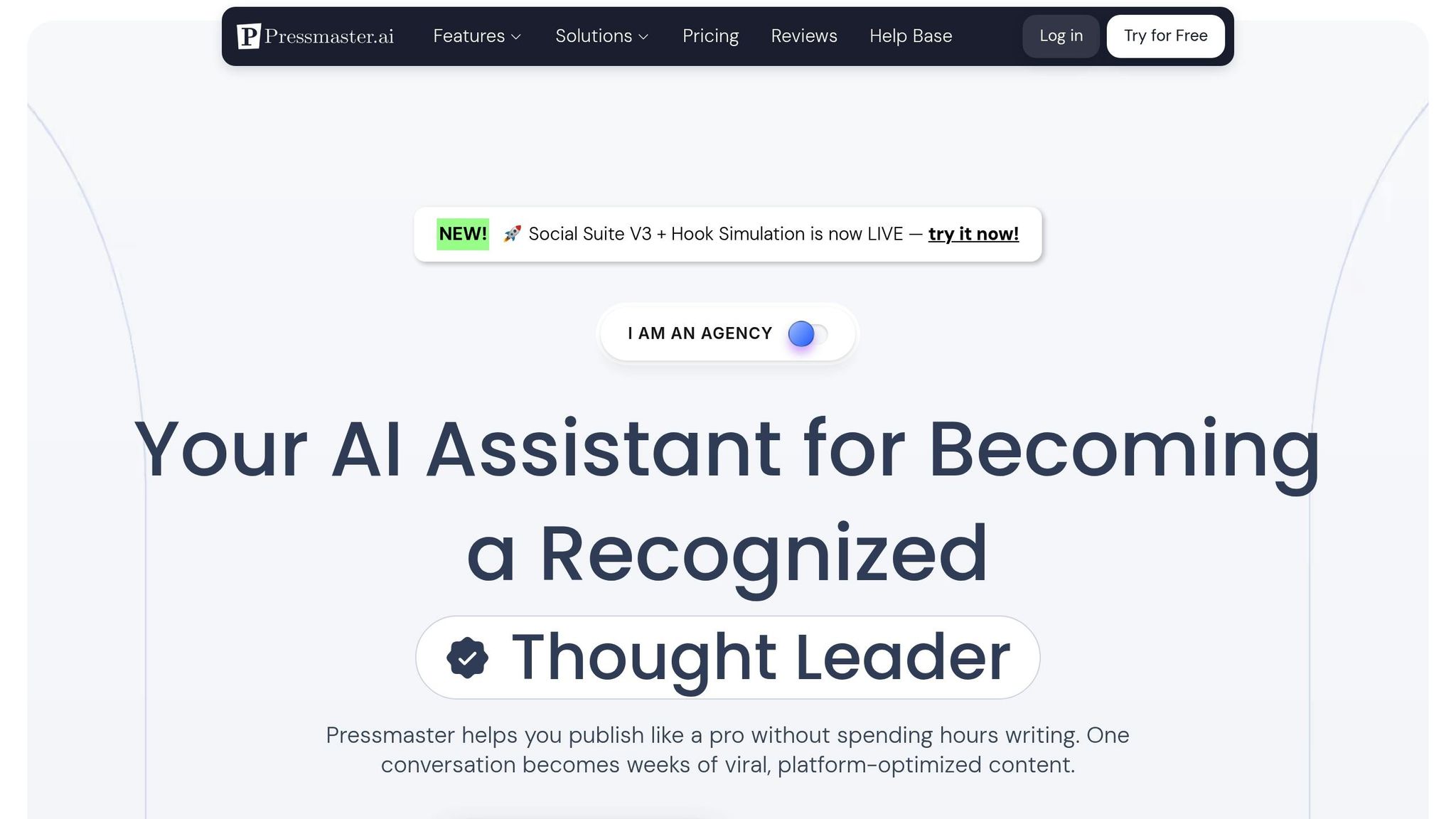
Choosing the right AI tool means understanding how it fits into your existing process. Pressmaster.ai is designed to seamlessly integrate into your workflow, improving every stage of content creation. It focuses on three key areas where creators often hit roadblocks: coming up with fresh ideas, managing multi-platform distribution, and analyzing performance data. Let’s break down how it addresses these challenges.
Better Ideas and Content Creation
Pressmaster.ai tackles one of the biggest hurdles in content workflows: generating ideas. Its Trendmaster feature scans over 500,000 data sources daily to identify trends weeks before they become mainstream. This gives you a serious advantage in creating timely, relevant content. For example, a marketing team can use Trendmaster to uncover trending topics for their next campaign, cutting down hours of manual research and boosting audience engagement [4]. Plus, curated trend alerts with actionable angles make the process even smoother.
The platform also ensures your content stays true to your style. Its brand voice feature lets you upload sample texts and define preferences. From there, the AI mimics your tone in every output, saving time on edits and maintaining consistency [6][5]. This is especially useful for agencies juggling multiple clients with distinct guidelines.
"It's one of the easiest programs for AI content creation. It captured my voice and tone amazingly well." – Stephen Meadows, COO at Coldwell Banker Premier [1]
Pressmaster.ai’s content creation isn’t just about generating text. It allows you to share your insights conversationally, turning them into weeks of engaging material. This approach keeps your content authentic while massively increasing your output.
Easy Publishing Across Platforms
Once your content is ready, the next challenge is distribution. Pressmaster.ai simplifies this by integrating with platforms like Facebook, Instagram, LinkedIn, and X (Twitter). It tailors your content to fit each platform’s format and optimizes it for their algorithms - all from a single dashboard [2][3].
This isn’t just about scheduling posts. The tool ensures your brand voice remains consistent across all platforms while optimizing for better performance. For example, a small business can plan an entire week’s posts in one session and let the tool handle publishing [2][3]. This reduces manual effort and minimizes errors that can occur when managing multiple accounts.
Pressmaster.ai also connects seamlessly to your website, CMS, and social channels. Whether you’re using WordPress, Wix, or Medium, one click is all it takes to publish perfectly formatted content everywhere you need it.
Use Data to Make Better Choices
Creating and publishing content is only part of the equation. Understanding how your content performs is just as important. Pressmaster.ai’s unified analytics dashboard pulls data from all your platforms, giving you a complete view of metrics like engagement, reach, click-through rates, and conversions [2].
This all-in-one approach saves time by eliminating the need to check multiple analytics tools. It also makes it easier to spot trends and identify top-performing content. For instance, a small e-commerce business using Pressmaster.ai increased its posting frequency by 40% and saw a 25% boost in engagement within three months. The analytics dashboard highlighted which product posts resonated most, enabling more targeted campaigns and better ROI.
The platform doesn’t stop at basic metrics. It provides actionable insights to guide your strategy. Marketing managers can quickly pinpoint which posts drive traffic and adjust their plans accordingly, making the entire workflow more effective and results-focused.
Examples and Customer Results
Examples from real businesses highlight how AI tools like Pressmaster.ai can bring noticeable improvements. These cases show how companies across different industries have used the platform to streamline workflows and boost engagement.
Case Study: Streamlining Social Media for a Small Business
A small fashion retailer in Austin, Texas, struggled with inconsistent social media posts that didn’t reflect its brand’s unique style. The owner found content creation to be time-consuming, posting irregularly, and had difficulty measuring which posts drove foot traffic to the store.
Things changed when the retailer adopted Pressmaster.ai. By dedicating just one afternoon a week to planning, the owner used the platform’s AI suggestions to create a cohesive content strategy. Weekly themes, like "fall fashion trends" or "styling tips for busy moms", were input into the platform, which generated tailored post ideas, recommended hashtags, and even suggested the best times to post. Pressmaster.ai then automated the scheduling, ensuring consistent activity across all social media channels without daily effort.
The results? Within three months, the retailer cut content creation time by 40%, grew their social media following by 25%, and saw a 60% increase in engagement. Even better, the store noticed a clear link between their online activity and increased in-store visits.
Testimonial: Improved Efficiency for a Marketing Agency
Creative Solutions Agency, a Denver-based marketing firm, faced challenges managing content for multiple clients in different industries. Before using Pressmaster.ai, their process was slow and tedious, making it difficult to scale their operations.
Pressmaster.ai’s multi-workspace feature transformed how they worked. Each client got a dedicated workspace complete with tailored brand settings, content calendars, and streamlined approval workflows. Collaboration tools made it easier for the team to coordinate campaigns without delays.
Jennifer Walsh, the agency’s content director, shared her experience:
"Pressmaster.ai streamlined our workflow. We can now manage content for multiple clients in one place, automate repetitive tasks, and quickly adapt campaigns based on real-time data. Our team's productivity has increased, and our clients have seen measurable improvements in campaign reach and engagement."
Thanks to these improvements, the agency reduced content turnaround time by 35%, allowing them to take on more clients. Campaign engagement rates also improved by an average of 50%.
These examples emphasize that choosing the right AI platform isn’t just about features - it’s about finding a tool that fits seamlessly into your workflow and delivers real results. Whether you’re a small business owner juggling tasks or an agency managing complex campaigns, a well-integrated AI tool can simplify your process and amplify your success.
Conclusion: Pick the Right AI Tool for You
Finding the perfect AI content creation tool starts with understanding your unique needs and ensuring it fits seamlessly into your workflow. The smartest businesses don’t just go for the trendiest option - they select tools that tackle their specific challenges and enhance their strengths.
Begin by analyzing your current content process from start to finish. Identify where you spend the most time, which repetitive tasks drain your energy, and where there’s room for improvement in quality. Whether you're a small business owner wearing many hats or a marketing agency juggling multiple client campaigns, having a clear picture of your workflow is essential.
Look for an AI tool that complements your voice and simplifies distributing content across different channels. Your audience values your perspective, and the right tool should amplify that authenticity while streamlining publishing tasks. Tools with detailed analytics can also help you adjust your strategy based on real data, not just assumptions.
Make sure the AI tool delivers tangible results. Over 80% of marketers report using AI to streamline workflows and improve content quality[6][5]. But success depends on choosing a tool that fits your budget, team size, and growth plans. Evaluate pricing structures carefully to ensure they align with your business goals.
Testing is a must before committing. Use free trials and starter plans to see how well a tool integrates with your current systems. Pay attention to how easy it is to learn, and assess the quality of customer support. This step ensures the tool not only meets today’s needs but also grows with your business.
For those ready to take the leap, Pressmaster.ai offers a tailored solution packed with essential features. It combines intelligent content creation with brand voice matching, automated multi-platform publishing, and advanced analytics. Its Trendmaster feature even spots emerging industry trends weeks ahead of time, keeping your content competitive. Plus, it transforms simple ideas into optimized, platform-ready content that’s scheduled and published automatically. The unified analytics dashboard pulls performance data from all your platforms, giving you actionable insights no matter the scale of your operations.
Your content creation process should work for you, not against you. The right AI tool becomes an extension of your creative team, handling the technical tasks so you can focus on strategy and creativity. Take the time to assess your needs, test your options, and choose a platform that grows alongside your business.
As content creation continues to evolve, businesses that invest in the right AI tools today will be better positioned to seize future opportunities while maintaining the human connections that drive success. The key is aligning your AI choice with your workflow and long-term goals.
FAQs
How can I identify which part of my content creation process would benefit most from using AI tools?
To figure out where AI tools can make the biggest difference in your content creation workflow, take a close look at the steps where you encounter the most challenges or spend the most time. Key areas to consider include:
- Idea generation: Do you often find it tough to brainstorm fresh and engaging topics that resonate with your audience?
- Content creation: Are you spending too much time drafting, revising, or fine-tuning your content for better quality or SEO performance?
- Publishing and distribution: Is managing deadlines, formatting, or scheduling posts eating into your productivity?
By identifying these bottlenecks, you can decide where AI can step in to streamline your process, save time, and improve the quality of your output.
What should I look for in an AI tool to ensure it matches my brand's voice and style?
When selecting an AI tool to match your brand’s voice and style, prioritize options that let you tailor the output to your specific needs. Look for features that allow the tool to adapt to your preferred tone, vocabulary, and messaging style as it learns over time.
It’s also helpful to choose a tool with customizable content templates and options for fine-tuning results. This way, the content it generates aligns seamlessly with your brand identity, helping you maintain consistency and save time without sacrificing quality.
How can I determine if an AI tool works well with my content management system and team collaboration needs?
When determining whether an AI tool fits with your current content management system (CMS) and team workflows, start by examining its integration options. Does it connect directly to your CMS, or does it offer APIs for easy linking? Also, ensure it supports the file formats and cloud storage platforms your team relies on daily.
Beyond integration, think about collaboration features. Tools with multi-user access, version control, and real-time editing can streamline teamwork and keep everyone on the same page. If you can, try the tool within your existing workflow to see how well it meshes with your processes. This hands-on approach can reveal how smoothly it might fit into your operations.
Related Blog Posts








Sign Up for our Pressmaster Newsletter
Sign up for our Pressmaster.ai newsletter to get instant alerts on trending topics, ensuring you stay ahead in your field with the latest insights and updates.


.avif)
.png)

.avif)


7 Viral Patterns That Drove 10,643% Growth
Turn natural conversations into content gold, make every insight count, and drive real conversations.

Please fill out the form to get our Viral Cheat Sheet


How to Become a Thought Leader in 6 Easy Steps
Increase your visibility, establish authority, and conquer your market with minimal effort.

Please fill out the form to get our PDF Checklist
