
From Zero to Icon: Build a Powerful Brand with AI in Days, Not Months
AI has transformed branding. What once took months of planning and large budgets can now be achieved in days using AI tools. Here's how:
- Faster Content Creation: AI generates tailored, on-brand content in minutes, from social media posts to SEO-optimized articles.
- Real-Time Analytics: AI tracks campaign performance instantly, allowing quick adjustments to improve results.
- Personalization: AI analyzes customer behavior to deliver highly targeted, engaging messaging.
- Cost Efficiency: Automating tasks reduces manual effort and lowers expenses.
- Trend Prediction: AI identifies emerging trends early, giving businesses a competitive edge.
AI-Powered Marketing Strategy for 2025 (QUICK GUIDE)
Step 1: Define Your Brand Foundation
Before you let AI take the reins, you need to build a solid foundation. Think of it as the blueprint that guides every piece of content, social media post, and campaign your AI tools will generate. Without this groundwork, even the most advanced AI can produce inconsistent results. But with a strong base, your AI can execute strategies with precision and consistency.
Create Your Brand Identity
Your brand identity goes far beyond a logo or a color scheme - it's the personality that makes your business stand out. To establish this, focus on three key elements: your mission, your values, and your voice.
- Mission: Define your business's purpose in one clear, concise sentence. Why does your business exist?
- Values: Outline the principles that guide your decisions and interactions. These should reflect what truly matters to your business and resonate with your audience.
- Voice and Tone: Decide how your brand communicates. Are you warm and approachable? Or more formal and authoritative? Do you use humor or keep things serious? Consistency here is crucial, as AI will rely on these guidelines to replicate your brand's personality across all types of content.
"AI enhances efficiency in writing web copy, but should enhance human creativity rather than replace it. Marketers should focus on strategic decisions that AI cannot replicate, such as brand positioning and long-term planning." – Seth Godin [2]
The most effective brands combine emotional storytelling with AI's ability to analyze data. Your unique perspective, personal experiences, and authentic voice are what make your brand memorable. While AI can process mountains of consumer behavior data - like demographics, preferences, and online habits - to uncover valuable insights, it’s your distinct story that connects with your audience on a deeper level.
Set Clear Goals
For AI to be effective in your branding efforts, you need specific, measurable goals. These objectives should align with your overall business strategy. Are you aiming to raise brand awareness, generate more leads, or improve customer loyalty?
Start by setting SMART goals - Specific, Measurable, Achievable, Relevant, and Time-bound. For instance, instead of saying, "increase engagement", aim for something like "boost email click-to-open rates by 20% within three months through AI-driven personalization." Clear goals like this give AI a focused direction and help you measure success.
Track key performance indicators (KPIs) such as conversion rates, engagement metrics, and ROI. Also, monitor efficiency improvements, like reduced workload or time saved on creating content.
Here’s a real-world example: OneRoof, a New Zealand-based real estate platform, used the Braze Intelligence Suite to personalize their campaigns. By setting clear targets, they achieved a 23% increase in email click-to-open rates, a 77% completion rate for their Profile Builder, and a 218% jump in total clicks to property listings [3].
Before diving into AI, take a close look at your current marketing process. Identify inefficiencies and determine where AI can make the biggest difference. Start small - focus on one or two initiatives rather than trying to automate everything at once. This way, you can test the waters, refine your approach, and build confidence in the technology.
Collect Your Brand Assets
Once your identity and goals are in place, gather your brand assets. These are the tools AI will use to create consistent, on-brand content across all channels. Think of them as the raw materials that shape your brand’s voice and image.
- Visual Assets: Include your logo variations (primary, secondary, horizontal, vertical), color palettes with hex codes, and typography guidelines with approved fonts. Document how logos should be sized, positioned, and used in different contexts. Specify primary, secondary, and accent colors to ensure AI uses the right shades every time.
- Imagery and Iconography: Provide guidelines for image styles - whether minimalist, realistic, or abstract - and approved icons. Offer examples of what works and what doesn’t to help AI align visuals with your brand’s aesthetic.
- Written Assets: Share your mission and vision statements, brand values, messaging templates, and tone-of-voice examples. Include sample content like social media posts, email templates, or blog excerpts to give AI a clear understanding of your brand’s unique voice.
Did you know that using the right color palette alone can boost engagement by 40% [5]? By providing AI with detailed brand specifications, you can ensure consistency across thousands of content pieces without needing constant oversight.
For better results, include examples of both correct and incorrect usage. This helps train AI to understand your brand’s nuances. Offering a variety of brand-compliant visuals - like social media posts and web banners - further strengthens its ability to maintain consistency.
For instance, an e-commerce platform working with TLG Marketing transformed its online presence by using AI to manage brand guidelines. They synchronized product launches with promotional content, creating a cohesive brand narrative that boosted customer conversions [4]. Similarly, a tech company achieved stronger global recognition by using AI to maintain consistent messaging across multilingual campaigns [4].
"AI-driven brand guidelines are more than just a set of rules for brand representation; they're a dynamic blueprint, powered by Artificial Intelligence, that ensures a brand's image is consistently represented across all marketing channels." – TLG Marketing [4]
To make this process seamless, organize your assets in a centralized, easily accessible format. Many businesses create digital brand kits that AI tools can reference instantly. This enables real-time brand compliance checks and ensures that every piece of content meets your standards.
Step 2: Use AI for Content Creation and Distribution
Now that your brand foundation is set, it's time to tap into AI's potential to streamline content creation and distribution. This is where things get exciting - turning your brand guidelines into a steady flow of engaging content that connects with your audience across various platforms. Did you know 91.3% of businesses have cut down content creation time with AI, and 75% of marketers say generative AI helps produce more content than traditional methods? [6] Let’s explore how this process unfolds.
Automate Content Creation
AI-powered content creation goes far beyond simply generating text. Tools like Pressmaster.ai use advanced technologies, including Natural Language Processing (NLP) and Natural Language Generation (NLG), to craft content that matches your brand's voice, reflects industry trends, and resonates with your audience. For instance, a short 5-minute conversation can be transformed into weeks' worth of SEO-optimized content, such as articles, social media posts, and press releases.
The magic starts with Trendmaster, a tool that scans over 500,000 data sources daily to predict emerging trends weeks before they gain traction. This ensures your content is always relevant to your audience's evolving interests.
Once you input your insights, the AI generates polished, SEO-friendly content. It doesn't stop there - every piece undergoes a rigorous triple-check process that includes fact-checking, plagiarism detection, and AI content verification, ensuring accuracy and consistency with your brand voice.
Other features like the AI Strategizer help craft content angles that captivate your audience, while the External Interview tool turns team insights into professional-grade content. For businesses aiming to expand globally, AI can also translate content into multiple languages while preserving context, so your brand messaging stays consistent across borders.
Once your content is ready, the focus shifts to distributing it effectively.
Distribute Content Across Channels
Creating quality content is just the beginning - getting it in front of the right audience at the right time is where AI takes distribution to the next level. Modern platforms can automate publishing across multiple channels, optimizing formats and schedules for each.
Take Pressmaster.ai's Social Suite, for example. It transforms a single article into over 15 platform-specific posts, tailoring each one based on insights from more than 50,000 viral posts. Your LinkedIn updates come off as professional, your Twitter posts are snappy, and your Instagram visuals are on point - all derived from the same source material.
Additionally, the press distribution feature connects you with an average of 400 premium outlets, creating syndication opportunities without the need for extensive media connections. The Newsroom feature makes it easy to set up a professional blog on your website in under an hour, complete with drag-and-drop templates and automatic SEO optimization.
With 72% of consumers engaging only with personalized messaging [7], AI ensures your content feels tailored to each user by analyzing behavior and delivering customized recommendations. Plus, you can manage and track all your publications from a single dashboard, saving time and ensuring consistency across platforms.
AI vs. Manual Methods
The advantages of AI over traditional content creation methods are striking. While manual approaches allow for deep personalization, AI excels in speed, consistency, and scalability. Here’s how they compare:
| Feature | AI-Powered Content Creation | Manual Content Creation |
|---|---|---|
| Speed | Produces content in minutes | Requires hours or even days |
| Cost | Saves money with automation | Involves higher costs due to manual effort |
| Consistency | Maintains a uniform brand voice | Can vary depending on individual creators |
| Scalability | Produces large volumes of content simultaneously | Limited by human resources |
| Research | Instantly scans thousands of sources | Demands time-consuming manual effort |
The numbers speak for themselves. Businesses using AI for content creation report a 3–5x boost in productivity, and 68% of organizations have seen improved ROI in their content marketing efforts after adopting AI [6]. While AI can't replace human creativity and strategic thinking, it frees up time for teams to focus on refining brand strategy and positioning.
The industry is growing fast. The Generative AI in Content Creation Market is expected to expand from $11.6 billion in 2023 to $175.3 billion by 2033. By 2026, machines are predicted to create 20% of all business content, a sharp rise from just 5% in 2020 [6]. To make the most of this shift, start by setting clear content goals, quality standards, and performance metrics. A workflow that combines AI's speed with human creativity ensures you get the best of both worlds - scalability and authentic storytelling.
Step 3: Use AI for Trend Analysis and Social Media
AI can be a game-changer when it comes to staying ahead of market trends and amplifying your social media presence. With its ability to process massive amounts of data, AI helps businesses track, analyze, and even predict shifts in markets, consumer behavior, and emerging technologies. This isn’t just about keeping up - it’s about gaining a competitive edge [8].
Find Trends with AI
Traditional methods of identifying trends often feel like playing catch-up. AI, on the other hand, works in real-time, uncovering patterns and opportunities almost instantly. For example, Pressmaster.ai's Trendmaster can detect key shifts weeks before they become mainstream. This gives brands the chance to create content or strategies around these trends while they’re still gaining momentum, positioning themselves as leaders in their industries.
The potential applications of AI-driven trend analysis are vast and diverse:
- In fintech, it predicts market movements and enhances portfolio management.
- Retailers use it to manage stock, understand customer preferences, and track buying habits.
- Healthcare providers leverage AI to anticipate health issues and deliver personalized treatment plans.
- For supply chains, AI forecasts demand shifts and simplifies logistics [8].
Consider Microsoft’s approach to the AI revolution. In January 2024, the company hit a USD 3 trillion valuation - only the second company in history to do so. A big factor? Its massive investment in OpenAI back in January 2023. This move underscores how early identification of trends can lead to monumental success [9].
"AI trend analysis is the way of the future when it comes to making strategic decisions. Its uses are almost endless, ranging from consumer experience tailoring to market opportunity identification." - Debut Infotech [8]
AI doesn’t just predict trends; it makes sense of them. By replacing guesswork with data-driven insights, businesses can make smarter decisions. It’s not just about being efficient - AI also enhances customer experiences by identifying preferences and delivering tailored services. Plus, predictive analytics can cut costs by helping allocate resources more effectively [8].
Optimize Social Media Content
Once you’ve identified trends, use AI to craft engaging social media content. AI tools can generate captions, posts, and ad copy, while also analyzing performance metrics like engagement rates and audience demographics. They even suggest the best times to post based on when your audience is most active. On top of that, AI can personalize content for specific audience segments, which boosts both engagement and conversions [10].
Take Pressmaster.ai’s Social Suite, for example. It can transform a single article into over 15 platform-tailored posts. By analyzing patterns from over 50,000 viral posts, it ensures every piece of content is optimized for its respective channel [12].
Here’s a real-world example: A fashion brand that adopted AI-driven social content optimization in March 2025 saw a 40% jump in engagement and a 25% increase in conversions. They achieved this by automating product descriptions, analyzing audience behavior to schedule posts at the most effective times, and using AI to generate hashtag suggestions [10].
"AI doesn't replace creativity - it amplifies it." - Core dna team [12]
To get the most out of AI, provide it with clear brand guidelines to maintain your unique voice. Let the AI generate multiple content options, then use A/B testing to see what resonates best across different platforms [11].
Manual vs. Automated Social Media
Finding the right balance between AI-driven and manual social media management is key to creating an effective strategy. While both have their strengths, AI’s efficiency and scalability can significantly accelerate your efforts.
| Feature | AI-Driven Social Media | Manual Social Media |
|---|---|---|
| Processing Speed | Instant content creation | Hours or days per post |
| Scalability | Unlimited profiles and platforms | Limited by team size |
| Consistency | Uniform brand voice | Varies by creator |
| Cost Efficiency | High setup, low ongoing costs | Low setup, high labor costs |
| Data Analysis | Instant analysis | Manual research takes days |
| Posting Optimization | Automatic scheduling | Manual monitoring required |
| Content Personalization | AI-driven targeting | Human intuition |
| Performance Tracking | Real-time analytics | Manual reporting |
AI excels at automating repetitive tasks like scheduling, audience targeting, and campaign optimization. This not only saves time but also reduces costs [13]. However, manual management brings the human touch - creativity, personal engagement, and the ability to build meaningful connections with your audience [13].
The best results often come from combining both approaches. Use AI for heavy lifting - content creation, scheduling, and analytics - while relying on human oversight to ensure the content feels genuine and aligns with your strategy. This hybrid approach allows you to scale efficiently without losing the personal touch that fosters brand loyalty. It’s all about blending AI’s speed with human creativity to keep your social media strategy sharp and effective.
Step 4: Track Results with Analytics
Once you've automated your content creation and distribution, the next step is keeping an eye on your results. Tracking is essential for refining your strategy because, without it, you're essentially flying blind. AI-powered analytics take raw data and turn it into actionable insights, giving you the tools to adjust and improve your approach.
Monitor Key Metrics
The success of AI-driven branding hinges on tracking the right metrics across your channels. Unlike traditional analytics, where you might need to juggle multiple platforms, AI simplifies the process by consolidating everything into one dashboard. This streamlined setup saves time and gives you a clearer view of your brand's overall performance.
Here are some key metrics to focus on:
- Engagement rates on social media platforms
- Reach and impressions to gauge content visibility
- Conversion rates that track actions taken by your audience
- Brand mentions, including sentiment and frequency
- Website traffic and user behavior trends
- Lead generation and customer acquisition costs
AI tools bring all this data together in real-time, making it easier to spot trends and act on them.
"We want our KPIs to evolve over time because we don't want to drive our business on legacy or vanity metrics." - Hervé Coureil, Chief Governance Officer and Secretary General, Schneider Electric [17]
Combining these metrics with direct user feedback gives you a more complete understanding of how your branding efforts are performing. In fact, organizations that use AI-enabled KPIs are five times more likely to align their strategies effectively with business goals compared to those relying on outdated metrics [15].
Adjust Campaigns in Real-Time
Once you're tracking the right metrics, AI can help you fine-tune your campaigns on the fly. One of AI's standout benefits is its ability to make real-time adjustments. Traditional marketing often relies on manual monitoring and slower response times, but AI systems analyze performance continuously, allowing for instant tweaks when needed [18].
For example, AI can detect anomalies - like sudden drops in engagement or unexpected spikes in traffic - and flag them immediately. This quick detection allows you to act fast. Amazon, for instance, cut cart abandonment rates by 25% within a month by using AI-powered retargeting ads with dynamic discounts. Similarly, HubSpot saw a 40% boost in click-through rates on LinkedIn Ads by dynamically adjusting ad targeting and content [19].
AI doesn't just save time; it also reduces the manual workload. It can instantly adjust ad creatives, targeting, and budgets while freeing up your team to focus on strategy and creativity. Businesses using AI report spending far less time on campaign management, shifting those resources to higher-level planning [19].
By leveraging predictive analytics, you can anticipate future trends in ROI and adjust campaigns proactively instead of waiting to react. This forward-thinking approach keeps you ahead of performance dips and lets you seize opportunities before your competitors do [18].
ROI of AI-Powered Branding
Understanding the return on investment (ROI) of AI-powered branding is crucial for justifying the cost and shaping future strategies. For instance, over 55% of retailers report AI-driven ROI exceeding 10% [14]. McKinsey even estimates that generative AI could contribute up to $4.4 trillion in annual global productivity, with marketing and sales capturing up to 75% of that value [20].
AI-powered branding delivers measurable results. It reduces weeks of manual work to just days, enhances visibility by optimizing content for broader reach, and boosts engagement rates through data-driven content strategies. A great example is Netflix, where AI-driven recommendations account for 80% of the content users watch, significantly increasing both engagement and conversions [16].
To get the most out of your investment, focus on areas where AI can tackle expensive or time-consuming challenges. Start with small pilot projects to test its effectiveness before rolling out larger initiatives. Also, ensure your data remains accurate and up-to-date by performing regular maintenance [20][21].
Take Pressmaster.ai's unified analytics dashboard, for example. It consolidates all your key metrics into one interface, eliminating the need to sift through spreadsheets and scattered reports. These automated insights provide a clear picture of how your business is performing across all channels, helping you make informed decisions faster and more effectively.
Step 5: Results and Customer Stories
When it comes to branding, the proof is in the results. AI-powered strategies have shown they can transform brand growth at a pace that was once unimaginable. Businesses across different industries have achieved milestones in months that used to take years. Let’s take a closer look at some real-world examples that highlight the impact of AI on brand growth and efficiency.
Success Stories
Stitch Fix leveraged AI to supercharge its growth and customer engagement. Between 2020 and 2024, the personal styling service saw an 88% revenue increase, reaching $3.2 billion. What's more, its use of AI-driven personalization boosted the average order value by an impressive 40% [14].
The luxury fashion house Hermès showed how AI can elevate even the most premium brands. After introducing an AI-powered chatbot, the company saw a 35% jump in customer satisfaction, proving that automation can enhance - not detract from - a luxury experience [14].
Coca-Cola demonstrated the power of AI in creating personalized brand experiences at scale with its "Share a Coke" campaign. By analyzing consumer data and tailoring content, the campaign led to a 2% increase in sales and an eye-popping 870% surge in social media engagement [24].
How AI Improves Branding Efficiency
These success stories highlight more than just growth - they also reveal how AI significantly enhances efficiency. For example, Kraft Heinz revolutionized its campaign production process by tapping into Google's media generation models. Tasks that previously required eight weeks of manual effort were completed in just eight hours [22].
Similarly, Monks, in collaboration with Hatch, harnessed AI to optimize personalized advertising. Their campaign achieved:
- An 80% improvement in click-through rates
- A 46% increase in engaged site visitors
- A 31% reduction in cost-per-purchase
On top of that, they cut the time to investment by half and slashed costs by 97% [22].
AI-driven branding doesn’t just save time - it delivers better returns. Brands using AI report a 20–30% higher ROI compared to traditional methods [23]. For instance, Amazon generates up to 35% of its total sales through personalized product recommendations [24]. Similarly, Netflix’s recommendation system powers over 80% of viewer activity, and AI-enhanced lead targeting boosts conversion rates by 30% [24][25].
The Role of Pressmaster.ai
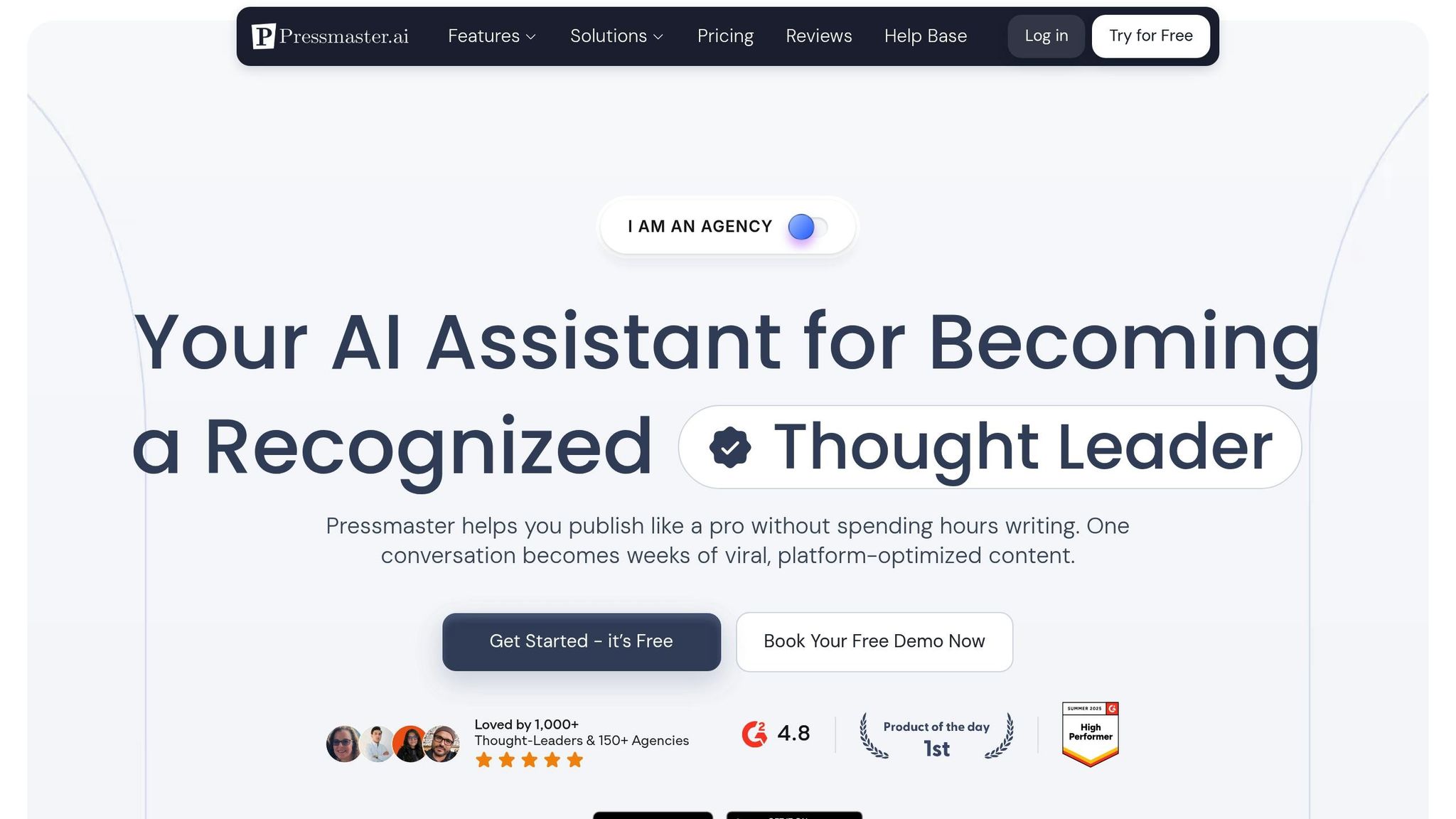
For businesses of all sizes, Pressmaster.ai offers a comprehensive solution to harness the potential of AI in branding. This platform simplifies the process by automating content creation, managing multi-channel distribution, and tracking performance - all while staying true to a brand’s voice. Its AI strategizer, trained on over 1 million viral articles, pinpoints the most engaging angles for your audience. Meanwhile, its analytics dashboard brings all key metrics together, giving you a clear snapshot of your brand’s performance in one place.
These tools make it easier than ever for companies to achieve the kind of results seen in the success stories above. AI-powered branding isn’t just about keeping up - it’s about staying ahead.
Conclusion: Speed Up Your Brand Growth with AI
AI is reshaping how brands grow, offering a level of precision and efficiency that traditional marketing methods can't replicate. Instead of relying on historical data or gut feelings, AI uses predictive analytics to adapt in real-time and deliver measurable outcomes.
"AI marketing offers unprecedented precision and efficiency, enabling marketers to understand and anticipate customer needs like never before." - iSmartCom [1]
Businesses using AI report a 25% increase in campaign effectiveness, alongside reduced costs and improved productivity [26][24]. This isn't just about speeding things up - it's about making smarter decisions that maximize your return on investment.
"AI-driven campaigns can dynamically adjust based on real-time data, ensuring that marketing messages are always relevant and engaging to the target audience." - AIContentfy [1]
The benefits are undeniable: AI enables precise targeting, a stark contrast to traditional marketing methods, where only 36% of TV ad impressions reach the intended audience [24]. With AI, every customer interaction becomes a chance to refine and improve.
Strong branding, AI-powered content creation, and real-time analytics are the key ingredients for accelerating brand growth. Here's a quick recap of how AI transforms the branding process at every stage.
Key Points
- Laying the Foundation: Start by defining your brand identity, setting clear goals, and organizing your assets. This ensures that AI-generated content aligns with your vision and remains consistent across platforms.
- AI-Powered Content Creation: AI simplifies the content production process by automating tasks while maintaining your brand's unique voice. This frees up time to focus on strategy and building relationships, while AI handles the heavy lifting.
- Real-Time Analytics: Unlike traditional marketing's delayed feedback, AI provides instant insights into campaign performance. With real-time data, you can make quick adjustments and continuously refine your approach for better results.
Next Steps
Ready to put these insights into action? Platforms like Pressmaster.ai are designed to help you unlock AI's potential for rapid brand growth. With tools like an AI strategizer trained on over a million viral articles, you can discover the most engaging content angles for your audience and automate content creation across multiple channels.
Explore Pressmaster.ai's suite of features, including trend analysis, automated press distribution, social media optimization, and real-time performance tracking. Everything you need to build a standout brand is at your fingertips.
Start your journey today. With AI, you can transform your brand-building process - achieving results in days that might otherwise take months.
FAQs
How can AI help ensure a consistent brand identity across different platforms?
AI tools simplify the process of keeping your brand identity consistent. By automating elements like logos, color schemes, and fonts, these tools ensure everything aligns with your brand guidelines across all platforms. They also centralize your branding assets, making it easier for your website, social media, and other channels to maintain a unified look.
On top of that, AI-driven content platforms can analyze your brand's voice and tone. This helps you craft messaging that feels consistent in style and language, no matter where it appears. Whether you're sharing an Instagram post, updating your website, or sending a marketing email, your audience will experience a seamless and polished brand presence.
What key metrics should I track when using AI to build my brand, and how do they influence my marketing strategy?
When leveraging AI to grow your brand, it’s important to keep an eye on key metrics like brand awareness, customer sentiment, and engagement rates. These numbers reveal how your audience views your brand and whether your message is hitting the mark.
You should also track metrics such as customer lifetime value (CLV), return on ad spend (ROAS), and conversion rates. These figures help you evaluate the success of your campaigns and the overall return on your investment. By digging into this data, you can refine your marketing strategies, allocate resources wisely, and ensure your AI-driven initiatives align with your business goals. This not only helps your brand grow faster but also builds stronger loyalty with your customers.
How is AI-powered content creation different from traditional methods, and how can it benefit my business?
AI-driven content creation sets itself apart from older methods by delivering speed, consistency, and scalability. Traditional content development often demands a lot of time, manual effort, and creative energy. In contrast, AI tools can produce tailored, high-quality content in a fraction of the time, helping you save both effort and resources.
For businesses, the advantages are hard to ignore: quicker content production, consistent quality, and a way to break through creative slumps. This means you can channel your energy into strategic priorities while maintaining a steady stream of engaging material. With AI, you can streamline your marketing efforts, cut costs, and fast-track your brand’s growth - achieving in days what might otherwise take months.
Related posts



Sign Up for our Pressmaster Newsletter
Sign up for our Pressmaster.ai newsletter to get instant alerts on trending topics, ensuring you stay ahead in your field with the latest insights and updates.


.avif)
.png)

.avif)


7 Viral Patterns That Drove 10,643% Growth
Turn natural conversations into content gold, make every insight count, and drive real conversations.

Please fill out the form to get our Viral Cheat Sheet


How to Become a Thought Leader in 6 Easy Steps
Increase your visibility, establish authority, and conquer your market with minimal effort.

Please fill out the form to get our PDF Checklist
