
How an AI Brand Builder Helps You Create a Standout Identity in Minutes
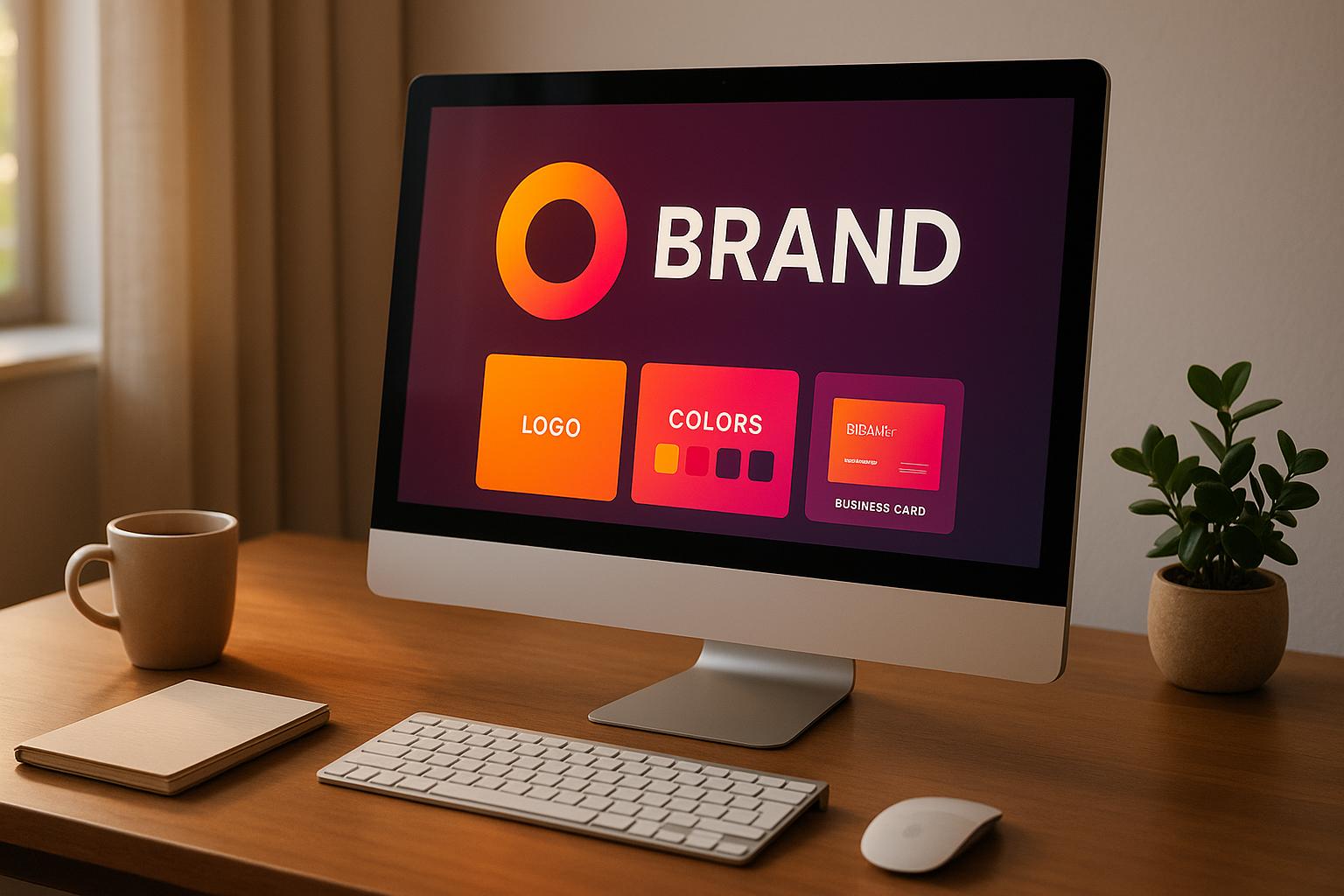
Building a brand no longer takes weeks. AI tools now simplify the process, creating logos, messaging, and marketing materials in minutes. Here's how AI brand builders are changing the game:
- Faster Results: AI tools deliver complete brand identities in as little as 15–30 minutes, compared to weeks with manual methods.
- Lower Costs: Many platforms are free or low-cost, making branding accessible for small businesses.
- Personalization at Scale: AI analyzes customer data to create tailored designs and messages that connect with specific audiences.
- Consistency Across Channels: AI ensures your visuals and messaging stay uniform across websites, social media, and more.
- Real-Time Insights: Built-in analytics help monitor performance and refine strategies instantly.
With AI, you can launch a professional, data-driven brand quickly and efficiently, whether you're a startup or an established business.
How AI Brand Builders Work
What is an AI Brand Builder?
An AI brand builder is a tool that simplifies and speeds up branding tasks like logo design, crafting messaging, and targeting audiences. Using machine learning and data analysis, it consolidates your brand's identity and values, ensuring consistency across all aspects of your business. Unlike traditional methods that often require a team of specialists and weeks of back-and-forth revisions, these platforms deliver results in a fraction of the time [2].
Think of it as your digital branding expert. By analyzing market data, consumer behavior, and design trends, an AI brand builder crafts a unified brand identity in minutes instead of months. At the heart of this process is the AI-Brand Blueprint - a comprehensive document that organizes all key elements of your brand into a single, cohesive system [2].
What makes these tools even more powerful is their ability to evolve. They don't just create static guidelines; they adapt and refine your brand strategy by responding to market trends and customer feedback. This means your branding stays relevant and engaging over time [2].
"AI is more than a content tool - it can act as an assistant in breaking down complex (and not-so-complex) branding tasks for your business." - Scott McDowell, Squarespace [4]
AI brand builders go beyond automation. They help with brainstorming ideas and making decisions by analyzing successful branding strategies and predicting which design elements will resonate with your audience [2]. The result? A streamlined branding process that delivers tangible results.
Key Benefits of Using AI for Branding
Speed is a major advantage. AI can cut logo design time by up to 70% and improve marketer productivity by anywhere from 20% to 80% [9][8].
Cost savings are another perk. The AI logo generator market is expected to grow from $0.48 billion in 2024 to $0.59 billion in 2025 [9].
AI also ensures consistent branding across all platforms. By using standardized templates and designs, it keeps your visual identity intact - whether you're creating social media posts, website content, or marketing materials [7]. These tools ensure everything aligns with your brand's tone and messaging [2].
Perhaps the most game-changing benefit is the ability to scale personalization. AI can produce visuals and content that are not only consistent with your brand but also tailored to different audience segments. It identifies trends, predicts what will work, and personalizes experiences in ways that human teams can't match [2].
Next, let’s explore how AI ensures your branding truly connects with your audience.
How AI Matches Your Brand with Your Audience
AI brand builders excel at aligning your brand with the right audience. By analyzing massive datasets, they uncover consumer behavior, preferences, and trends [3]. This helps brands understand customer interactions, identify pain points, and create messaging that resonates.
The process begins with journey mapping, which pinpoints areas of friction and suggests improvements [3]. This data informs the creation of detailed buyer personas and messaging that addresses your audience’s needs and motivations.
When human insights are paired with AI tools, the results can be impressive. Brands that prioritize personalization can see up to 40% more revenue compared to their competitors [5]. AI uses consumer data to tailor experiences across multiple touchpoints. For instance, recommendation systems suggest products based on past purchases, and AI chatbots offer personalized support.
AI also evaluates how effective marketing messages are across different platforms and audience groups [6]. With 67% of consumers influenced by online sentiment, this real-time feedback allows brands to adjust their strategies to maintain a positive image [6].
A great example of this is SuperAGI in 2025. They used machine learning to analyze audience preferences and behaviors, creating personalized branding through a scalable cloud-based platform. The results? A 25% increase in website traffic, 30% growth in social media engagement, and a 20% boost in customer loyalty. Their custom logos and brand materials even drove a 15% jump in sales [8].
AI-Powered Interviews to Define Your Brand Voice
AI interviews have changed the game when it comes to developing a brand voice. Instead of wading through complicated forms or questionnaires, you simply engage in a conversation with the AI. The system asks tailored follow-up questions based on your responses, making the process feel more like chatting with a branding expert than filling out paperwork. During this exchange, the AI picks up on patterns in your tone, values, and goals, analyzing word choices and sentence structures to uncover the essence of your communication style.
For instance, if you emphasize customer service as a key value, the AI might ask about your strategies for addressing complaints or your preferred communication methods. It can even review existing content you’ve created to ensure your new branding aligns with your established style.
"I look for brand-aware, customizable, and intuitive tools for non-designers. For example, I want the ability to train AI on a brand's tone of voice, color palette, and visual mood without having to code or dig through complex settings. If a tool helps us keep branding consistent across touchpoints, from web copy to social to decks, that's a win. It's a bonus if it has collaboration features so our small team of five can work across roles efficiently." – Kristin Marquet, Founder and Creative Director, Marquet Media [10]
Once your brand voice is clearly defined, the AI moves on to creating visuals and other essential brand materials.
Automated Logo and Content Creation
After establishing your brand voice, AI tools take over to generate logos and other key branding assets automatically. These systems produce a variety of logo designs, color palettes, and typography options that align with your brand’s identity.
But logos are just the beginning. AI can also create social media graphics, website content, marketing materials, and even video content while maintaining a consistent tone and style across all platforms [10]. This eliminates the need to hire separate designers for different tasks, saving both time and money.
One of the standout benefits of these tools is affordability. For example, some logo design options start as low as $3.99 for one-time use [10]. Despite the cost savings, you still retain full creative control. You can tweak colors, layouts, and messaging to ensure the final product reflects your vision. This blend of AI efficiency and human input strikes the perfect balance between professionalism and personalization.
Multi-Channel Publishing and Analytics
AI doesn’t just stop at creating content - it also simplifies distribution and performance tracking. These tools can publish your content across multiple platforms simultaneously, adapting it to fit each channel’s specific requirements. No more manually resizing images or rewriting captions for different platforms.
Real-time analytics give you a clear picture of how your brand is performing. From a single dashboard, you can monitor metrics like engagement rates, audience growth, and content effectiveness without needing to log into multiple platforms.
What’s more, the AI dives deeper than basic metrics. It identifies which design elements, messaging styles, and posting times resonate most with your audience. This feedback loops back into the content creation process, helping you refine and improve over time. Automated scheduling ensures your brand stays active and visible, even when other business tasks demand your attention - a crucial step for building trust and recognition with your audience.
Step-by-Step Guide to Building a Brand Identity with AI
AI has revolutionized the way brands are built, simplifying the process from concept to launch. Let’s break it down into three key phases: input, customize, and launch.
Input Your Brand Details
The journey begins by feeding the AI essential details about your brand - your name, industry, and concept [10]. To get the most out of the system, include additional context like your brand’s story, mission, and core values [11]. These details help the AI craft content that reflects your brand’s personality and aligns with its goals.
Many AI tools use a conversational approach, asking follow-up questions to dig deeper. For instance, if you highlight customer service as a key value, the AI might ask how you handle complaints or what tone you prefer when communicating with customers. This back-and-forth interaction helps the system understand not just what your brand does, but how and why it operates the way it does.
Once the groundwork is laid, it’s time to move on to refining the AI-generated materials.
Customize Generated Content and Visuals
After collecting your brand details, the AI generates initial concepts for logos, color schemes, messaging, and other visual elements. From logos to social media graphics, AI can quickly create multiple design options [13], giving you a variety of choices to explore.
The key to getting the best results lies in how specific you are about your preferences. By carefully guiding the AI through prompt adjustments, you can ensure the outputs align with your vision. For example, training the AI on your brand’s existing style can help create a cohesive look across all assets [12].
"AI is actually a great tool for presenting evidence of what already exists so that we can do the opposite." - Jenny Henderson, Brand Strategist and Designer [15]
AI tools can also suggest color palettes and layout options based on design principles and current trends [13]. For rapid prototyping, AI is invaluable - it allows for quick A/B testing of different visual ideas [13]. However, while the AI provides a strong starting point, human input is essential. Final tweaks and oversight ensure the designs truly reflect your brand’s identity [14].
Once your brand identity is polished, the next step is launching it and keeping track of its performance.
Launch and Monitor Your Brand
AI platforms make it easy to adapt your designs for different channels automatically [12]. Templates can be reused and adjusted for platforms like social media, websites, and print materials, ensuring your brand stays consistent everywhere [12]. This adaptability saves time and ensures a professional look across all touchpoints.
After launching, use real-time analytics to monitor how your brand is performing across various channels. These insights can reveal what resonates with your audience and what might need tweaking. Regularly refining your strategy based on data [5] ensures your messaging and visuals stay engaging and effective.
AI tools can also help maintain consistency as your brand grows, checking for alignment with your guidelines [12]. Best of all, this entire process - from input to launch - can be completed in hours, not weeks. By cutting out tedious manual work, you can focus on what matters: building a brand that connects with your audience.
Success Stories: How AI Changes Branding
Businesses are already seeing impressive outcomes thanks to AI-powered branding tools. These examples show how companies are transforming their brand presence and achieving measurable growth in record time.
Customer Testimonial 1: Building a Brand in Hours
A small business owner in the U.S. shared their experience of struggling for weeks with traditional branding methods before discovering Pressmaster.ai. By completing a guided interview about their business values and target audience, they received a fully prepared logo, brand voice guidelines, and marketing copy - all in just three hours[16]. This quick turnaround allowed them to launch their website and social media channels the very same day[16].
Customer Testimonial 2: Measurable Engagement Growth
A mid-sized e-commerce company reported dramatic improvements after adopting AI-driven branding solutions. Within the first month of using AI-generated content and visuals, they experienced a 40% rise in social media engagement and a 25% increase in website traffic[17][18]. The company credited these gains to the platform’s ability to create consistent and targeted messaging.
These examples underline an important trend: small businesses and startups are increasingly turning to AI-driven branding tools to speed up their go-to-market plans[19][20]. Up next, we’ll look at how AI-driven branding stacks up against traditional methods in terms of cost and time.
Manual vs. AI-Driven Branding: Cost and Time Comparison
Traditional branding is a time-intensive process. It often involves in-depth discovery sessions, strategy workshops, multiple design revisions, and finally, developing a cohesive brand identity. This can take anywhere from 2 to 8 weeks and comes with a price tag that leans toward the higher end. On the other hand, AI-driven branding offers a stark contrast, delivering a complete brand identity in as little as 15–30 minutes. This speed can be a game-changer for businesses looking to hit the market fast.
Cost is another area where AI-driven branding stands out. Many AI branding platforms operate on free or low-cost models, making them a practical choice for startups or small businesses working with tight budgets. Traditional branding services, however, often come with costs that can be prohibitive for smaller companies. To illustrate these differences, here’s a quick comparison:
Side-by-Side Comparison Table
| Feature | AI Branding | Human Branding |
|---|---|---|
| Speed | Instant to hours | Weeks to months |
| Cost | Free to low-cost | Medium to high |
| Scalability | High - fast for multiple versions | Medium - handcrafted |
One of AI branding’s standout features is its scalability. It can quickly generate multiple brand variations, which is especially useful for businesses that need to test different strategies or manage several product lines. These platforms automate tasks like choosing color palettes, suggesting typography, and even defining a brand voice, saving both time and money.
For businesses with limited resources or tight deadlines, AI branding levels the playing field, making professional branding more accessible than ever before.
Conclusion: Transform Your Branding with AI
Branding has undergone a seismic shift - it’s no longer a process that drags on for weeks or demands a hefty budget. Today, 73% of U.S. companies use AI, and those that embrace it see a staggering 152% increase in annual revenue [1][22]. This evolution is especially impactful for small and medium-sized businesses (SMBs), with 91% reporting revenue growth and improved efficiency thanks to AI tools [21].
As Harvard Business School Professor Karim Lakhani puts it:
"I have a strong belief that the future of business is going to be AI-powered. There's not one organization, one role that will not be touched by AI tools." [1]
The challenges that once made professional branding feel out of reach - like limited budgets, tight timelines, or lack of design skills - are fading fast. AI-driven brand builders have leveled the playing field, making it possible for businesses of all sizes to craft identities that truly connect with their audiences. The ability to act quickly in this fast-paced market can be the key to seizing new opportunities before they disappear.
This is where tools like Pressmaster.ai come in. By harnessing AI, Pressmaster.ai accelerates the process of building and sharing your brand identity. It ensures your messaging stays consistent across every channel, from press releases to social media. With features like Trendmaster, which scans over 500,000 data sources daily, and the ability to mirror your unique brand voice, it helps you stand out while staying true to your vision.
The future belongs to businesses that adapt swiftly. With 75% of SMBs already experimenting with AI and 71% planning to increase their AI investments in the next year [21], the tools to create a standout brand are now at your fingertips. Your bold, memorable identity is just minutes away.
FAQs
How does an AI brand builder keep my brand identity consistent across platforms and over time?
An AI brand builder takes the guesswork out of maintaining brand consistency by automating the application of your branding guidelines. It ensures that your logo, color palette, fonts, messaging, and tone are consistently applied across all platforms - whether it's social media, email campaigns, or other marketing materials.
With AI, the system can both create and review content to ensure it aligns with your established standards. Plus, it adjusts seamlessly to any updates in your brand guidelines, keeping everything on track as your business grows and changes. This level of consistency not only builds trust and strengthens recognition but also ensures your brand remains memorable wherever it appears.
How much can I customize my brand when using an AI brand builder?
AI brand builders give you plenty of ways to personalize your brand identity, making it easy to reflect your business's unique character. From tweaking logos and color palettes to selecting fonts and design patterns, these tools let you shape every detail to match your vision. Many even include templates tailored to specific industries, offering a helpful starting point that you can adjust to fit your brand.
This level of customization makes it simple to create a polished, professional brand presence that aligns with your goals - whether you're launching something new or giving your current identity a fresh look. Plus, the process is fast and user-friendly, letting you design a standout brand in just minutes.
How can AI brand-building tools help small businesses and startups create professional branding on a tight budget?
AI-powered tools are giving small businesses and startups the ability to craft professional brand identities without breaking the bank. These tools help simplify tasks like designing logos, creating brand messaging, and pinpointing target audiences, enabling businesses to produce quality branding materials faster and at a lower cost compared to traditional methods.
With intuitive interfaces and automation, these tools make it possible to create polished branding without needing advanced design skills. On top of that, AI's ability to personalize ensures brands can make a lasting impression in competitive markets by tailoring their identity to align closely with their audience - all while staying budget-friendly.
Related posts


Sign Up for our Pressmaster Newsletter
Sign up for our Pressmaster.ai newsletter to get instant alerts on trending topics, ensuring you stay ahead in your field with the latest insights and updates.


7 Viral Patterns That Drove 10,643% Growth
Turn natural conversations into content gold, make every insight count, and drive real conversations.

Please fill out the form to get our Viral Cheat Sheet


How to Become a Thought Leader in 6 Easy Steps
Increase your visibility, establish authority, and conquer your market with minimal effort.

Please fill out the form to get our PDF Checklist
