
How to Use AI for Writing Content That Attracts and Retains Your Audience
AI tools have transformed content creation, making it faster, more efficient, and tailored to audience needs. Here's how businesses are leveraging AI to create content that connects:
- Save Time: Automate tasks like research, drafting, and editing, reducing hours of manual effort.
- Personalized Content: AI analyzes audience data to create content that addresses specific needs and interests.
- Multi-Platform Output: Generate blog posts, social media captions, and emails from a single input.
- Maintain Brand Voice: Tools learn your writing style to ensure consistency across all content.
- Data-Driven Insights: Use AI analytics to track performance, predict outcomes, and refine strategies.
AI doesn’t just simplify content creation - it helps businesses produce content that resonates with readers while staying true to their brand. The result? Stronger engagement, loyalty, and measurable growth.
How to use AI to Write Content (the right way)
How AI Content Creation Works: The Basics
To make the most of AI in content creation, it's important to understand how it works. At its heart, AI content creation relies on large language models (LLMs). These models are trained on massive datasets to grasp context, intent, and language patterns. Rather than just rehashing existing material, they analyze your input and generate fresh, tailored content.
The process starts with you. By providing a prompt, keywords, or specific guidelines, you set the direction for the AI. Using natural language processing (NLP), the AI then creates content that aligns with your goals.
What sets AI apart is its ability to learn from your existing content. By feeding examples of your work, the AI develops a profile of your unique tone and style. This means the output doesn’t feel generic - it reflects your brand's voice. Over time, as you refine the drafts it produces, the AI gets even better at aligning with your preferences, making it a powerful tool for streamlining content creation.
What AI Tools Do in Content Creation
AI tools simplify tasks that traditionally required hours of effort. They begin by analyzing your input - whether it's a brief topic overview or detailed instructions - and identifying key themes and objectives. This ensures the content aligns with your audience and purpose.
Next comes draft generation. The AI creates content based on your requirements, taking into account factors like brand voice, target keywords, and preferred format. Whether you need a blog post, social media caption, press release, or email, the system crafts material suited to your needs.
A standout feature of AI tools is their ability to match tone and style. Need a formal tone for a business report or a casual vibe for a tweet? Many platforms allow you to adjust the tone, with some offering over 20 options to cater to different audiences and platforms[3].
The optimization process is ongoing. AI tools assess your content for readability, SEO, and engagement potential, suggesting improvements to headlines, keyword placement, and structure. Some even predict performance metrics, giving you insights before publication.
Another advantage is multi-format adaptation. With a single input, the AI can create content for various platforms, from blog posts to video scripts, ensuring each piece fits its intended use.
AI tools also excel at research integration, incorporating relevant facts, statistics, and trends into your content. This keeps your material accurate and up-to-date without requiring extra research time.
These capabilities come together to create a seamless content creation process that saves time while improving quality.
Key Features of AI Content Platforms
AI content platforms are packed with features designed to enhance every stage of the creation process. Here are some of the most impactful ones:
- Trend analysis: Tools like Pressmaster.ai scan hundreds of thousands of sources to identify trending topics and keywords. This helps you stay relevant by creating content that resonates with your audience[1].
- Voice and tone adjustment: Customize how your content sounds to suit different audiences. Whether you want an authoritative tone for business or a conversational style for social media, AI tools can adapt. Many platforms learn your unique voice from past content and replicate it consistently.
- SEO tools: AI platforms analyze keyword density, suggest related terms, and provide real-time optimization tips. Some even adjust your content automatically to improve search visibility, making it easier to rank higher on search engines[5][6].
- Fact-checking and plagiarism detection: These features ensure your content is accurate and original. By cross-referencing trusted databases, AI tools flag inaccuracies and confirm your material is unique - critical for maintaining credibility.
- Performance prediction: Using data from successful content, AI platforms can forecast how well your material might perform. They simulate audience responses and recommend tweaks to improve engagement before you hit publish.
- Multi-language support: Many AI tools can generate content in over 25 languages while maintaining your brand's tone and message. This makes it easier to connect with international audiences and expand your reach[3][5].
- Integration with other tools: Platforms often integrate with applications like WordPress or Google Docs, allowing you to create, edit, and publish content without switching between programs.
- Analytics and reporting: AI tools provide insights into your content's performance across platforms. By tracking engagement and identifying popular topics, you can refine your strategy based on real-world data.
When these features work together, they create a comprehensive system that not only saves time but also boosts the quality and effectiveness of your content. The key is choosing a platform that aligns with your specific goals and audience needs.
Setting Up Your AI Content Workflow
Building an efficient AI-powered content workflow takes planning and precision. The goal is to create a system that uses AI to streamline your process while keeping your brand's voice and quality intact.
Getting Ready for AI Integration
Before jumping into AI-driven content creation, it's crucial to lay a solid foundation. This step ensures your AI tools can accurately reflect your brand's personality and deliver content that resonates with your audience.
Define your brand voice. Start by creating a detailed style guide that outlines your tone, vocabulary, and formatting preferences. Upload writing samples to train AI tools to replicate your voice. For instance, tools like Pressmaster.ai can analyze your website content and other samples to identify your communication style, ensuring the AI produces content that feels authentic to your brand.
Know your audience inside and out. AI performs best when it’s tailored to your audience. Document key details like demographics, challenges, and preferred platforms. Tools like Pressmaster.ai can scan hundreds of thousands of data sources daily, spotting trending topics and industry shifts weeks in advance. This enables you to create content that aligns with your audience's interests before trends even peak.
Set measurable content goals. Avoid vague objectives like "boost engagement." Instead, define clear targets such as "increase organic traffic by 25% in six months" or "generate 50 qualified leads monthly through content." These goals guide your AI tools to focus on the right metrics and help shape your strategy.
For example, blog posts might aim to improve SEO rankings, while social media content may prioritize shares and comments. Having specific goals ensures your AI-powered workflow delivers tangible results.
Once your brand and audience are clearly defined, you can move on to building a structured content creation process.
Step-by-Step Content Creation Process
With your foundation in place, it's time to establish a repeatable, scalable process for using AI in content creation. This workflow should balance efficiency with quality control.
Start with idea input and expertise extraction. Use AI to refine and expand your ideas rather than generating them from scratch. Many platforms now offer conversational interfaces where you can share your thoughts, and the AI will develop them into full content pieces. For instance, you might spend a few minutes discussing an industry trend, and the AI can turn that into blog posts, social media updates, or even video scripts. This ensures the content reflects your unique expertise.
Choose the right tone and format. Tailor your content to the platform and audience. A LinkedIn post might require a professional, thought-leadership tone, while Twitter demands brevity and engaging language. Adjusting your tone and format ensures your content resonates with its intended audience.
Generate and refine your first draft. Let the AI create an initial draft based on your input and formatting preferences. Many tools can produce detailed drafts quickly - some even generate long-form content in seconds. Afterward, review the draft to ensure it aligns with your brand and includes any personal insights that add value.
Optimize for platform-specific needs. Fine-tune your content for its intended platform. This might involve refining SEO elements, adjusting for readability, or tweaking the style to match audience expectations. AI tools can assist with keyword suggestions and structural improvements to boost search visibility.
Maintaining Quality and Brand Voice
Once your workflow is in place, maintaining quality and consistency becomes essential. While AI handles much of the heavy lifting, the human touch ensures the final product meets your standards.
Create a thorough review process. Every piece of AI-generated content should undergo human review before publication. Develop a checklist to verify accuracy, brand voice alignment, and content goals. Pay close attention to claims, statistics, and industry-specific details, as your reputation hinges on accuracy.
Add personal touches for authenticity. AI is great for structure and language, but your unique perspective is what sets your content apart. Include anecdotes, lessons learned, or specific examples that reflect your experience. These human elements build trust and make your content more engaging.
Establish feedback loops for improvement. Monitor the performance of your AI-generated content against your goals. Use this data to refine your prompts and processes. Many AI platforms improve over time as they learn from your edits, becoming more aligned with your style and standards.
Define team roles clearly. If you're working with a team, assign specific responsibilities for each stage of the workflow - ideation, drafting, editing, and approval. Use collaboration tools to streamline communication and maintain consistency. Templates and standard procedures can help ensure everyone produces content that aligns with your brand.
Creating Engaging Content with AI Optimization
Once you've set up your AI workflow, the next step is using optimization to fully tap into AI's ability to connect with your audience. AI evolves from being just a writing assistant to becoming a strategic ally - one that understands your audience, adjusts to different platforms, and enhances your content’s performance over time. These strategies fit seamlessly into your workflow, helping your content hit the mark on every platform.
Adapting Content for Different Platforms
Each platform has its own vibe, audience expectations, and algorithms. What works on LinkedIn might flop on Twitter, and a blog post is a whole different animal compared to an Instagram caption. This is where AI shines - it identifies these differences and adjusts your content to fit.
Match formatting and tone to each platform. AI tools can tweak your content’s length, structure, and tone to align with each platform’s best practices. For example, Pressmaster.ai's Social Suite can take a single article and transform it into platform-ready posts tailored for each channel. Your LinkedIn post could carry a polished, professional tone, while the Twitter version becomes snappy and engaging to spark conversations.
Align with platform algorithms. Each platform rewards different types of engagement. AI helps structure your content to encourage the behaviors that algorithms favor. For blogs, that might mean focusing on metrics like time spent on the page or scroll depth. For social media, it could mean crafting posts that drive shares and comments. Some tools even offer real-time SEO scoring for blog posts or social media features that guide you toward creating posts that resonate.
Adapting content isn’t just about reformatting - it’s about capturing your message’s essence and presenting it in the way each audience prefers.
Using AI for Content Personalization
Audiences today expect content that feels like it’s speaking directly to them. AI makes this level of personalization achievable at scale by analyzing data and tailoring messages for specific audience segments.
Segment your audience and fine-tune messaging. AI can analyze demographics, past interactions, and engagement trends to create detailed audience segments. It then adjusts the tone and messaging for each group. For instance, technical readers might want in-depth, data-heavy content, while executives might prefer concise, high-level summaries. AI ensures each audience gets content that feels tailored to their needs, all while keeping your brand voice consistent.
Use dynamic content strategies. Personalization doesn’t stop at segmentation. Advanced AI tools can analyze real-time engagement data to fine-tune recommendations and messaging as they go. For example, Pressmaster.ai scans over 500,000 data sources daily to spot emerging trends weeks before they gain traction. This allows you to create content that not only aligns with your audience’s current interests but also anticipates what they’ll care about next.
By combining personalization with detailed analytics, you can refine your approach and maintain a strong connection with your audience.
Improving Strategy with AI Analytics
The best content strategies are built on constant analysis and refinement. AI-powered analytics go beyond surface metrics, offering deep insights into what’s working, why it’s working, and how to improve.
Monitor engagement metrics. AI tools track everything from basic stats like click-through rates and time on page to more advanced indicators like emotional engagement and scroll behavior. These insights reveal which parts of your content are resonating most with your audience.
Predict performance before publishing. Some AI platforms can forecast how your content will perform based on historical data and current trends. This lets you test different approaches and optimize your content before it goes live, saving time and maximizing impact.
Get actionable recommendations. AI doesn’t just analyze - it provides specific suggestions for improvement. For example, it might recommend the best times to post, new topics to explore, or ways to repurpose high-performing content based on engagement data.
The results speak for themselves. Wesley Pitts, Founder of KnoxBots and TerraSYNC, shared his experience with AI-driven optimization:
"10,643% increase in post impressions and 24% increase in followers in less than a week"
after using Pressmaster.ai for his first posts. Another user reported:
"over 400 followers for our Business LinkedIn in ONE day"
thanks to AI-powered insights.
Create continuous improvement loops. AI analytics establish automated feedback loops, learning from your content’s performance. Over time, the AI refines its recommendations, helping you consistently improve your content strategy.
Automating Content Distribution with AI
Creating great content is just the first step; ensuring it reaches your audience across multiple platforms is equally important. This is where AI-powered tools come in, turning hours of manual work into an efficient, automated process. These tools not only save time but also transform single pieces of content into multi-channel campaigns that maximize reach and consistency.
Multi-Channel Publishing Automation
Gone are the days of manually posting content on every platform. AI platforms now handle this seamlessly, distributing your content across blogs, social media, and press outlets to connect with your audience wherever they are.
Simplify publishing with one-click distribution. Modern AI platforms integrate with popular content management systems and social networks, allowing you to publish across multiple channels in one go. Instead of juggling each platform individually, you can distribute content everywhere simultaneously, saving time and ensuring no platform is overlooked.
Keep your brand voice consistent. One major challenge of multi-channel publishing is maintaining a unified brand tone. AI tools solve this by analyzing your past content and brand guidelines to replicate your unique style across platforms. This ensures that whether your audience is reading a blog post or a tweet, the messaging feels authentic and consistent.
Post at the right time. AI doesn’t just handle the where - it also takes care of the when. By analyzing engagement data, these tools schedule posts for times when your audience is most active. For example, your LinkedIn post might go live at 9:00 AM on a Tuesday, while your Instagram story drops at 6:00 PM on a Friday, all without you needing to lift a finger.
The time savings are impressive. Research shows that AI-driven content automation can double your output without doubling your effort, freeing up marketing teams to focus on creative strategy rather than repetitive tasks[2].
Transforming One Piece into Multiple Formats
AI’s capabilities go beyond distribution. It can also repurpose a single piece of content into formats tailored for each platform, making your content work harder for you.
Tailor content to platform-specific needs. Every platform has its own quirks - character limits, image sizes, or formatting rules. AI tools automatically adjust your content to meet these requirements while preserving your core message. For instance, a 2,000-word blog post could be transformed into a LinkedIn article highlighting key insights, a Twitter thread breaking down major points, and an Instagram story with eye-catching visuals - all optimized for engagement on their respective platforms.
Breathe new life into old content. AI tools can scan your existing content library - blog posts, videos, podcasts - and identify opportunities for reuse. A popular article from last year might be turned into a fresh social media campaign, an updated infographic, or a series of educational posts, extending its value and reach.
But it doesn’t stop at simple reformatting. AI can take diverse content types - like a YouTube video or a white paper - and turn them into entirely new formats while keeping your voice intact. This means every idea you create can generate multiple pieces of content, maximizing the return on your creative investment.
Build a complete content ecosystem. Advanced AI tools can create entire content strategies from a single piece of input. For example, Pressmaster.ai’s Social Suite can take one article and generate 15+ posts optimized for different platforms, using insights from thousands of successful posts. This ensures you’re not just posting more, but posting smarter, with content designed to perform well on each platform.
AI even handles visuals. It can generate images, graphics, and video snippets to accompany your text, ensuring each post feels complete and engaging, no matter the platform.
This level of automation changes the game for content marketing. Instead of creating separate content for each channel, you can focus on developing strong, core ideas and let AI handle the heavy lifting. The result? Consistent messaging, optimized performance on every platform, and more time to focus on what really matters - your creative vision.
Measuring Results and Making Improvements
Creating content with AI is just the beginning - what sets successful strategies apart is understanding how that content performs and using insights to refine your approach. The real value of AI-powered content lies in the ongoing feedback loop that helps sharpen your efforts.
Tracking Performance with AI Metrics
AI simplifies the analytics game by consolidating data from multiple channels into one easy-to-read dashboard. Instead of bouncing between platforms, you can see all your performance metrics in one place, making it easier to identify what’s working and what isn’t.
A unified view of performance. AI-driven platforms gather data from all your channels - social media, website traffic, email campaigns, and more - into a single dashboard. This lets you track engagement rates, reach, and ROI across the board. With advanced analytics, these platforms highlight patterns that might be missed when analyzing each channel separately[4].
Zero in on key metrics. AI tools cut through the clutter by focusing on the performance indicators that align with your goals. Whether it’s likes, shares, and comments for social engagement or unique views and conversions for website traffic, these platforms provide context to help you adjust your strategy effectively.
Deeper audience insights. Beyond surface-level metrics, AI can reveal what topics resonate most with your audience and even predict performance before you hit publish. It also identifies when your audience is most active, helping you optimize timing for maximum impact[3].
These insights don’t just show how your content is performing - they guide you toward smarter, more targeted improvements.
Continuous Content Improvement
AI doesn’t stop at showing you the numbers. It takes things further by suggesting actionable improvements and, in some cases, automating updates to keep your content relevant and engaging.
Actionable insights for better results. When AI spots underperforming content, it goes beyond identifying the problem - it suggests specific fixes. For example, it might recommend tweaking headlines with trending keywords, adjusting tone to better align with your audience, or breaking up long content into more digestible formats[7].
Automated updates to stay relevant. AI tools can monitor your content library and flag posts that could benefit from updates. For instance, if an older blog post is still driving traffic but needs fresh information, the platform will suggest which sections to revise and how to make them more effective[7].
Preserve your brand voice. One concern with AI-driven optimizations is the risk of losing your unique style. Advanced platforms address this by learning your voice and ensuring that all updates stay true to your tone and messaging. This consistency helps maintain your brand identity across all content[4].
Smarter testing and optimization. AI-powered A/B testing takes the guesswork out of content tweaks. Instead of manually creating and testing variations, AI can generate multiple options, predict which will perform best, and automatically implement the winning version[3].
With these tools, improving your content becomes a seamless, data-driven process. Regularly reviewing AI-generated reports ensures your strategy evolves alongside audience preferences.
Real Results from AI-Powered Content
Users of AI-powered content platforms are seeing real, measurable improvements in both engagement and efficiency.
"My first posts with Pressmaster were incredible. 10,643% increase in post impressions and 24% increase in followers in less than a week. Amazing results!"
- Wesley Pitts, Founder at KnoxBots, TerraSYNC
"Pressmaster drastically cuts my content time. It captures my voice, finds trending topics, and publishes everywhere, blog, socials, all done in under 30 minutes. A transformative tool."
- Emmy W., Fractional CMO & Agency Owner
From increased social media engagement to faster content production, users consistently report significant gains. Some agencies have even boosted their cold email lead close rates from 8% to 21% within three months by incorporating AI-driven content optimization into their workflow.
The key to these successes? A commitment to tracking results, acting on insights, and refining strategies based on performance data.
How Pressmaster.ai Transforms Your Content Measurement
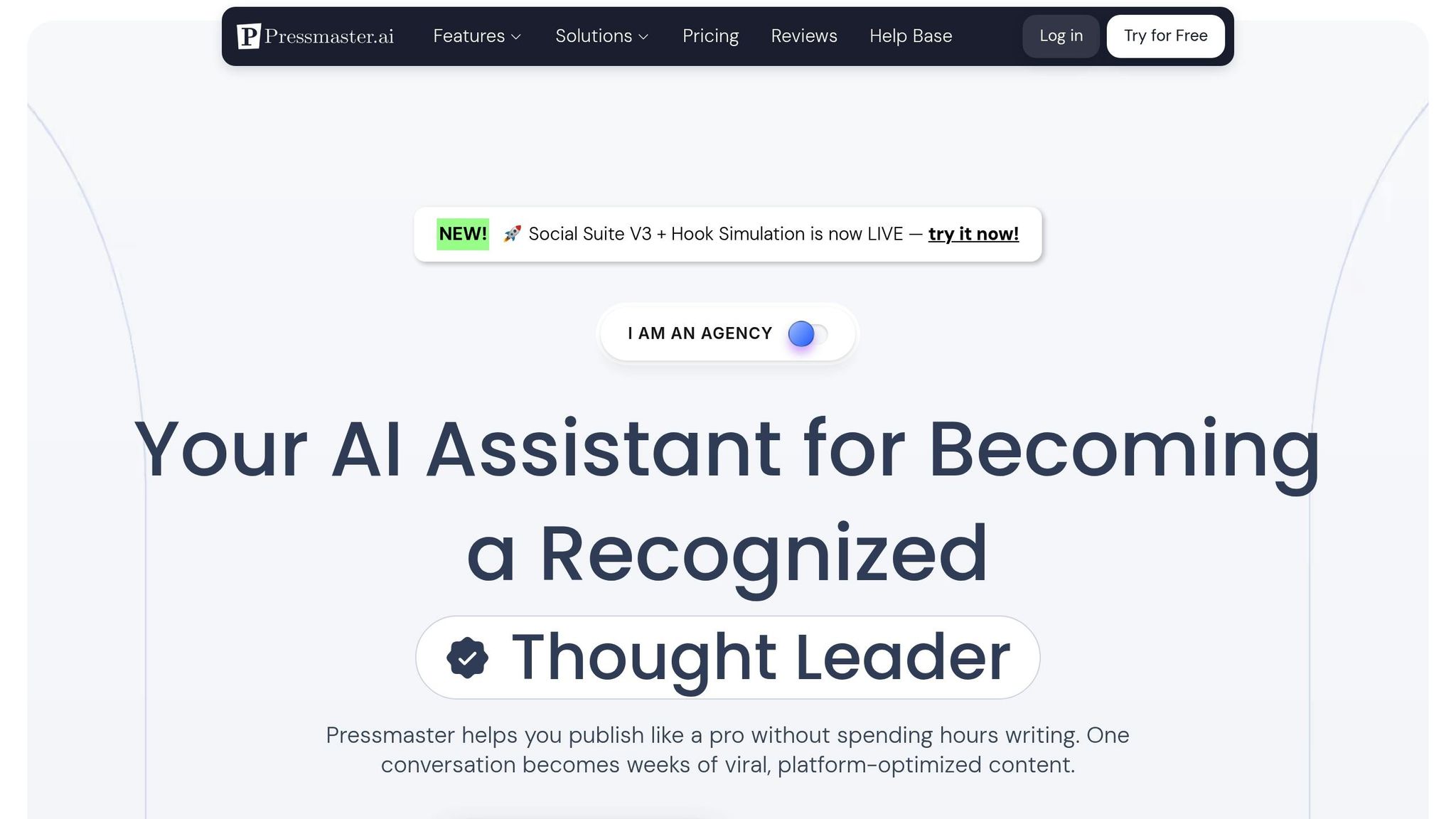
Pressmaster.ai takes content optimization to the next level by consolidating all your performance data into a single, easy-to-navigate dashboard. It provides real-time insights that show how your strategy is performing across every channel.
The platform’s AI strategizer, trained on over 1 million viral articles, doesn’t just analyze performance - it predicts what will work. It offers specific recommendations based on proven engagement patterns, ensuring your content hits the mark. With built-in tools for fact-checking, plagiarism detection, and content verification, every piece of content is polished and aligned with your voice before it goes live.
Whether you’re evaluating the success of one article or an entire campaign, Pressmaster.ai equips you with the insights and automation you need to enhance results and strengthen connections with your audience.
Conclusion: Using AI for Better Content Creation
AI has reshaped the way businesses approach content creation, transforming it from a time-consuming process into a strategic advantage. It’s not just about speeding things up - it’s about creating content that truly connects with your audience and drives meaningful growth.
Companies using AI-powered content tools often see clear improvements in both efficiency and performance. These tools make it easier to scale content production without compromising quality, ensuring brand consistency across every channel.
One of AI's biggest strengths is its ability to help you get more from your content. By repurposing content across various formats, you can stretch your investment further while maintaining a consistent message at every touchpoint. This approach boosts your return on investment while keeping your brand aligned.
AI’s data-driven nature is what makes it so effective. Platforms powered by AI don’t just provide raw data - they offer actionable insights, showing you what resonates most with your audience and suggesting ways to improve. This feedback loop ensures your content becomes more impactful over time, helping to strengthen your connection with your audience.
Of course, quality control is still essential. The best strategies combine AI’s efficiency with human oversight, using tools that allow for customized brand voice settings and real-time collaboration. This balance ensures your content feels genuine while benefiting from AI’s speed and precision. Together, these elements create a system that brings your content vision to life.
As we look ahead, businesses that weave AI into every part of their content strategy will have a clear edge. AI-powered tools are no longer optional - they’re becoming critical for staying competitive. From improving SEO and maintaining a consistent publishing schedule to delivering personalized messaging and data-driven insights, these tools help you grow your audience and keep them engaged for the long haul.
How Pressmaster.ai Empowers Your Strategy
Pressmaster.ai harnesses the full power of AI to streamline every step of the content lifecycle, from creation to distribution. With its AI strategist, trained on over one million viral articles, it doesn’t just help generate content - it predicts what will resonate most with your audience.
The platform uses trend analysis, multi-channel automation, and unified analytics to give you a competitive edge. Imagine turning a quick 5-minute conversation into weeks’ worth of content, all published seamlessly across your channels while staying true to your brand’s voice.
Whether you’re a startup aiming to build thought leadership or an established company scaling your content efforts, Pressmaster.ai offers the automation and insights you need to attract and keep your audience engaged.
FAQs
How can AI help ensure my content reflects my brand's unique voice and style?
AI tools, such as Pressmaster.ai, are built to align with your brand's specific tone and style. By analyzing your existing content, these tools pick up on your preferred language, phrasing, and overall messaging. This allows them to create content that feels natural and stays true to your brand identity.
With AI, you can streamline your content creation process without losing the personal connection that engages your audience. Every piece of content stays consistent with your brand's voice, saving you time while keeping your messaging on point.
What are the best ways to incorporate AI into my content creation process?
Integrating AI into your content creation process can make your workflow faster and more effective. Begin by pinpointing tasks that tend to be repetitive or take up too much time - things like brainstorming topics, drafting outlines, or tweaking tone and style. These are areas where AI tools can step in and save you hours of effort. Plus, AI can help you better understand your audience by analyzing their preferences and offering insights to make your content more relevant.
To dive in, pick AI tools that match your content needs - whether you're focusing on blog posts, social media updates, or email campaigns. Test out features like automated editing, keyword suggestions, and tone adjustments to ensure your content connects with your audience. As you continue, keep an eye on performance metrics and listen to audience feedback. This will help you fine-tune your AI usage, boosting engagement and keeping your readers coming back for more.
How can AI predict how well content will perform before it's published, and how accurate are these predictions?
AI has the ability to evaluate factors like audience preferences, trending topics, and past performance data to predict how a piece of content might perform even before it goes live. Using machine learning algorithms, it spots patterns and offers insights into the kind of content that connects best with your audience.
Though AI predictions aren't flawless, they tend to be dependable when grounded in solid data. These insights can guide you in refining your content strategy, boosting engagement, and making smarter decisions - giving your content a better shot at success.
Related Blog Posts








Sign Up for our Pressmaster Newsletter
Sign up for our Pressmaster.ai newsletter to get instant alerts on trending topics, ensuring you stay ahead in your field with the latest insights and updates.


.avif)
.png)

.avif)


7 Viral Patterns That Drove 10,643% Growth
Turn natural conversations into content gold, make every insight count, and drive real conversations.

Please fill out the form to get our Viral Cheat Sheet


How to Become a Thought Leader in 6 Easy Steps
Increase your visibility, establish authority, and conquer your market with minimal effort.

Please fill out the form to get our PDF Checklist
