
How to Use AI for Writing Content That Feels Real and Resonates With Readers

AI tools can help you write faster, but readers often disengage when content feels robotic. The key is using AI to assist - not replace - your creativity. Here’s how to make your content stand out while keeping it relatable:
- Readers value trust: Over 50% disengage when they think content is fully AI-generated.
- AI’s limits: It’s great for drafting but lacks emotional depth and cultural awareness.
- Blend AI with a human touch: Use tools like Pressmaster.ai to draft content, then refine it with personal stories, clear examples, and conversational tone.
- Understand your audience: Address their specific challenges and use their language.
- Define your brand voice: Create a guide that ensures consistency across all platforms.
- Edit thoroughly: Add personality, check facts, and adjust tone to make content feel natural.

AI Content Creation Statistics: Trust, Usage, and Performance Metrics
How I Humanize AI Content (And Still Rank #1)
Core Elements of Content That Connects
Creating content that truly resonates requires three key ingredients: a deep understanding of your audience, a clear and unique brand voice, and the inclusion of real-life experiences. Without these, even the most sophisticated AI-generated content can come across as empty and uninspired.
Know Your Audience
Getting to know your audience means going beyond surface-level demographics. Dive into their real struggles and ask yourself: What keeps them awake at night? What challenges leave them feeling stuck? What words do they naturally use when describing their pain points?
When you understand these nuances, your content transforms from generic advice to tailored solutions. Instead of broadly addressing "marketing managers", imagine speaking directly to a content leader overwhelmed by tool fatigue. Research shows that human-centered content can double click-through rates [3]. By addressing real problems rather than superficial ones, you’ll see better engagement, build trust, and reduce bounce rates.
To make this happen, consider building mindset profiles. These go deeper than traditional buyer personas by focusing on what your audience truly values and worries about. Armed with these insights, you can fine-tune your brand voice to meet their unique needs.
Create a Brand Voice Guide
Your brand voice is what makes your content stand out. To define it, gather input from across your organization and analyze what’s already working well.
Start by talking to team members from various departments - marketing, sales, customer service, even HR. Ask creative questions like, "If our brand were a character in a novel, what traits would it have?" Then, take a closer look at your top-performing content to identify consistent patterns in tone, structure, and style.
Next, put together a brand voice chart that outlines 3–4 core attributes, along with clear examples of what to do and what to avoid. Here’s an example:
| Voice Attribute | Do's | Don'ts |
|---|---|---|
| Authentic | Be honest and share real experiences | Fabricate stories or mislead your audience |
| Personal | Use first-person language and relatable anecdotes | Sound robotic or overly formal |
| Supportive | Show empathy and address reader concerns | Come across as dismissive or condescending |
You can also use tone sliders to visually map where your brand sits on spectrums like formal–casual or bold–reserved.
"Your brand voice is the moat around your content, protecting it from sounding like lifeless AI or everyone else." – Ivy Croteau, Canto
To take it a step further, upload strong writing samples - like a standout blog post or your About Us page - into your AI tool. This helps the AI learn the specific vocabulary and style that make your brand unique. But don’t stop there - ground your content in real-world experiences to make it truly connect.
Use Real Stories and Examples
AI is great at recognizing patterns, but it doesn’t have lived experiences. That’s why content created purely by AI can sometimes feel flat. Adding real stories and specific examples turns generic information into something meaningful and relatable.
Incorporate real-life anecdotes and success stories wherever possible. These details help illustrate why your message matters. For instance, instead of just claiming that your tool saves time, share a specific customer story. Highlight measurable results and include a direct quote explaining how the change impacted their day-to-day life.
This approach is especially important given that 71% of consumers worry about the reliability of AI-generated content [4]. By weaving in genuine experiences, you show your audience that there’s a human element behind your message, which builds trust and credibility.
When working with AI, make sure to include these authentic details during the editing process. Pull quotes from customer interviews, reference real projects, and highlight challenges your team has overcome. During your final review, read the draft aloud - it’s a great way to catch areas that might feel too polished or detached. If something feels off, it’s likely a sign to add more personality or nuance. These small tweaks can make all the difference in keeping your content human and relatable.
Setting Up Pressmaster.ai for Your Brand Voice
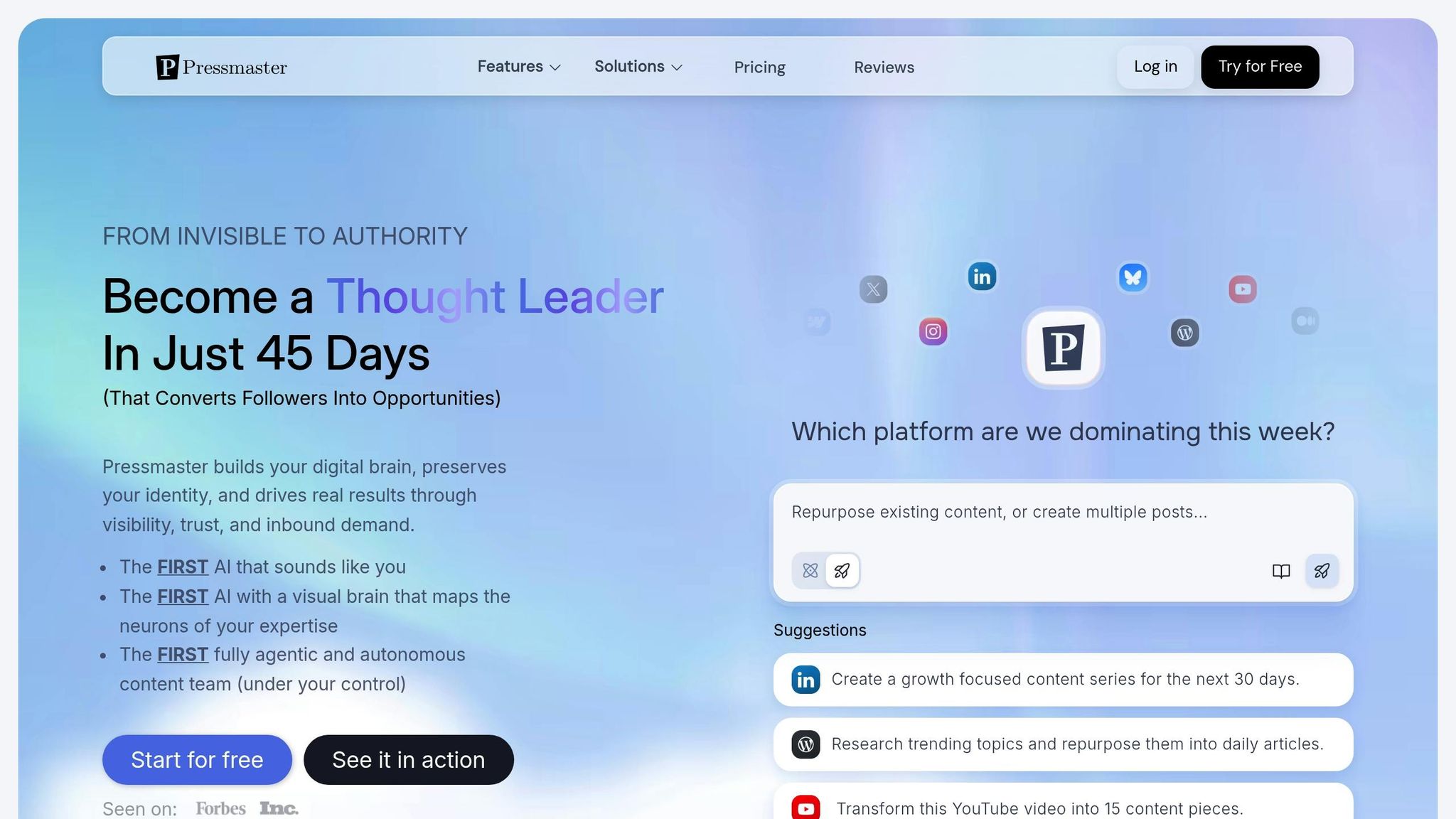
After identifying what sets your brand apart, the next step is teaching Pressmaster.ai to reflect that uniqueness. The platform dives into over 30 linguistic traits - like word choice, sentence flow, and tone - based on your sample text to craft a custom voice fingerprint for your brand [2]. This ensures that every piece of content stays true to the voice you’ve defined.
Train AI with Your Writing Style
Start by uploading writing samples that best capture your brand’s personality. This could be a standout blog post, your About Us page, or even a series of social media updates that resonated with your audience. The AI analyzes these samples to pinpoint the patterns that make your voice stand out.
For a more interactive approach, use the Expertise Interview feature. Think of it as having a conversation with a skilled journalist. It asks thoughtful follow-up questions and draws out your authentic insights. Todd Sivers, a SaaS & AI Tester, explains:
"It doesn't write so much as it reorganizes my own words for me. I love the experience of the interview it does to pull information from me" [2].
This method captures nuances like rhythm and emotion that other AI tools often miss [5][6]. Patrick Benske, a Marketing Strategist, shares a similar sentiment:
"Pressmaster has changed the way I create content for my own brand and also for our clients. The feature that stands out the most are the AI interviews" [2].
If you're juggling multiple brands or need distinct voices for different platforms, Pressmaster.ai's Multi-Voice Management feature allows you to create and manage separate voice profiles while maintaining overall consistency [2].
Pick the Right Writing Mode
Once your voice profile is set, Pressmaster.ai offers specialized writing modes tailored to different content needs. Unlike generic AI tools that can produce bland text, these modes are designed to keep your tone intact [5][6].
For example, the Conversational Interview Mode works well for in-depth articles or thought leadership pieces where your expertise takes center stage. If you’re crafting quick social media posts or shorter content, streamlined options save time while preserving your voice. No matter the format, your voice profile ensures every piece feels authentic and on-brand.
Set Up US Formatting and References
To make your content resonate with American audiences, configure Pressmaster.ai's Smart Brand Guide with US-specific settings, such as date formats (MM/DD/YYYY), currency symbols ($), and imperial units. These settings are applied consistently across all content types - whether it’s a LinkedIn post, a blog article, or a press release. Plus, the platform’s built-in tools verify data accuracy automatically [2][5].
With a 4.8/5 rating from top creators [2], users often highlight how effectively the platform handles these regional details without needing constant adjustments.
Turn Ideas into Drafts: Step-by-Step Workflow
Once your brand voice is set, it’s time to roll up your sleeves and move from brainstorming to creating content that truly connects. Using your unique voice as a foundation, this workflow takes you from raw ideas to a polished draft ready to publish.
Find Topics That Matter with Trendmaster
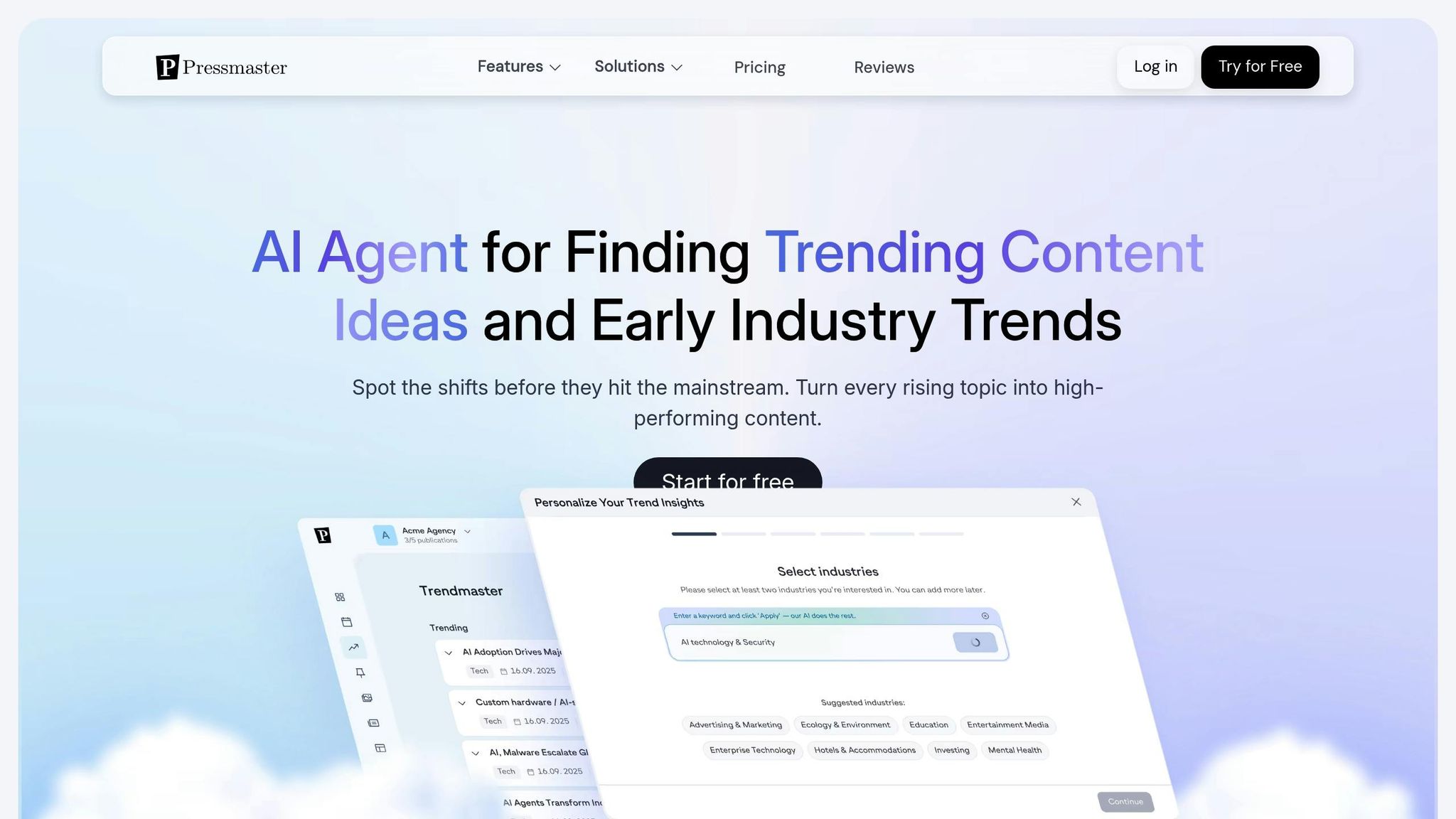
The toughest part of content creation isn’t writing - it’s figuring out what to write about. That’s where Trendmaster steps in. Scanning more than 500,000 sources daily, it identifies emerging topics 3–4 weeks before they hit the mainstream. This means you won’t waste time on outdated ideas; instead, you’ll position yourself as a forward-thinker on what’s next.
But Trendmaster doesn’t stop at trending keywords. It uses custom filters for industry, audience demographics, and geography to surface topics that align perfectly with your brand. Each trend comes with a relevance score, helping you zero in on high-priority subjects. Plus, you’ll get suggested angles to spark creativity and get past any writer’s block.
When juggling multiple platforms and tight deadlines, having a tool that spots trends weeks ahead gives you the time to craft thoughtful, well-researched content instead of rushing to keep up. This proactive strategy ensures your content stays timely and resonates with your audience.
Turn Conversations into Content
Forget spending hours on outlines - let the AI do the heavy lifting. The Expertise Interview feature functions like sitting down with a skilled journalist who knows the right questions to ask. You simply talk through your ideas, and the AI captures not just your words but also the way you naturally express them, keeping the authenticity of your voice intact.
This conversational method often uncovers insights you might overlook with a traditional outline. The AI also asks follow-up questions based on your responses, digging deeper into areas where you have expertise. The result? Content that feels personal and genuine.
Already have content in another format, like a YouTube video or podcast? Use the Pin Your Thoughts feature by pasting the URL. The AI will extract key points, ensuring your draft aligns with your existing messaging. This is a game-changer for repurposing content across different channels, creating a seamless flow of ideas that still feels like you.
Write Better Prompts for Natural Results
Even with a customized voice profile, how you guide the AI makes a big difference. Vague prompts lead to bland results. Be specific about what you want: request plain language instead of jargon, ask for varied sentence structures to avoid monotony, and use U.S.-specific examples when relevant (like referencing dollars or imperial measurements).
For example, instead of saying, "write about email marketing", try something more detailed: "Outline three effective email subject line strategies that increased open rates for U.S. e-commerce brands, including specific percentage improvements." The more context you provide - like audience type, tone, and desired outcomes - the more natural and tailored the output will feel.
To take it further, the platform’s AI Strategizer, trained on over 1 million viral articles, can suggest engaging angles for your content. It analyzes which structures and styles resonate with readers and helps you adapt them to your unique voice and perspective.
Edit AI Content to Sound More Human
Starting with an AI-generated draft is just the beginning; the real magic happens when you refine it to sound more human. Research highlights this: 86% of marketers edit AI-generated content, and humanized text earns twice as much trust from readers (74% vs. 37%) [1][8].
Edit in Multiple Passes
Trying to fix everything in one go can be overwhelming and lead to missed opportunities for improvement. Instead, break the editing process into smaller, focused steps:
- Double-check facts like statistics, dates, and names using reliable sources (AI can sometimes make up information).
- Add your voice by replacing overly formal phrases with conversational language, using contractions like "you're" instead of "you are", and including first-person pronouns.
- Include personal touches like anecdotes or client examples - details that AI simply can't create.
- Mix up sentence lengths to avoid the mechanical tone AI often produces. Combine short, impactful sentences with longer, more detailed ones.
- Read it out loud to catch awkward phrases that might seem fine on screen but feel unnatural when spoken [7].
"Treat AI as a draft, not a voice… Tone and emotional pull always come from a human pass." – Bhavik, Founder & Content Lead, Ohh My Brand [3]
This step-by-step approach reflects the 80/20 principle: let AI handle about 80% of the heavy lifting, such as research and basic structure, while you focus on the final 20% - adding personality, emotional depth, and trust-building elements [1].
Once you’ve polished the draft, tools like Pressmaster.ai can help you fine-tune the tone and ensure a professional finish.
Use Pressmaster.ai's Editing Features
Pressmaster.ai offers tools to elevate your content. Its AI Content Detector, combined with the Plagiarism & Fact Checker, runs a triple-check on every piece to catch errors before publication. You can even ask the AI to critique its own robotic phrasing and rewrite sections - a technique called prompt chaining. Compare different versions side-by-side and use the platform’s analytics to see how your humanized content performs. Over time, this feedback helps you refine your editing process and better connect with your audience.
The goal? Content that feels authentic and resonates with readers.
Check Your Content Against a Quality List
Before hitting publish, run through a quick checklist to ensure your content feels natural and engaging:
- Does it sound like something you'd say in a conversation?
- Are there specific, relatable examples instead of vague, generic ones?
- Is the rhythm varied when read aloud, or does it fall into a predictable, monotonous pattern?
- Have you replaced stiff, formal phrases (like "delve" or "underscores") with more natural language?
- Does it use contractions and active voice to create a friendly, approachable tone?
Content that checks these boxes tends to perform better. For example, humanized pieces can increase average time-on-page from 45 seconds to over 2 minutes. Adding personal stories? That can boost shares by 30% [8][3].
Conclusion
Crafting content that truly connects with your audience isn’t a matter of choosing between AI and human creativity - it’s about blending the strengths of both. With 74% of marketers already using AI tools and 86% investing extra effort to add a human touch, it’s clear that technology is becoming a trusted partner in the content creation process. Yet, consumer skepticism persists, with 71% expressing caution toward entirely AI-generated content [1][4].
The process is simple: let AI handle the heavy lifting - research, outlining, and drafting - then step in to add your own voice, stories, and emotional nuance. As one AI researcher wisely pointed out, success depends on how effectively you guide the tool [6].
Platforms like Pressmaster.ai make this collaboration easier. With a stellar 4.8/5 rating, it offers tools like the Expertise Interview to capture genuine insights and a triple-checking system to ensure accuracy without losing your unique voice. Many users see it as a reliable thinking partner rather than just a tool.
Here are a few practical tips to help you merge technology with authenticity:
- Read your content aloud to catch any unnatural or robotic phrasing.
- Double-check your facts to avoid inaccuracies and maintain credibility.
- Use prompt chains to fine-tune tone and rhythm [6].
- Let AI handle structure, while you weave in personal insights and an authentic voice.
Ultimately, the goal is to write for real people while using AI as a helpful assistant. That’s how you create content that doesn’t just inform - it resonates.
FAQs
How can I make AI-generated content feel natural and relatable?
To make your AI-generated content feel more natural, start by giving specific and detailed prompts that clearly define your desired tone, audience, and style. For instance, let the AI know if you're aiming for a conversational vibe, a hint of humor, or if you'd like to include relatable examples. These details guide the AI in producing a draft that’s closer to your intended outcome.
Once you’ve got the draft, it’s time to add your personal touch. Swap out generic phrases for language that reflects your brand’s personality, weave in real-life examples or anecdotes, and tweak sentence structures to make the text sound more conversational. Reading the content out loud can be a great trick - it helps you spot overly formal or robotic sections. Breaking up long sentences or adding casual phrases can help restore a natural flow.
Lastly, take a moment to ensure the content feels empathetic and relevant. Does it address your audience’s needs? Does it sound approachable, like something you’d say in a friendly chat? Thoughtful prompts, personal edits, and a focus on connection will transform AI-generated text into something that feels genuinely human and engaging.
How can I define and maintain a consistent brand voice using AI?
Defining and sticking to a consistent brand voice with AI requires a thoughtful approach. Begin by pinpointing your brand's core values, personality, and tone. One way to do this is through a structured process, such as using an AI-powered questionnaire to clarify these elements. Then, gather examples of your existing content - blog posts, social media captions, or even email newsletters - that best embody the voice you're aiming for. These examples can guide AI tools in analyzing your style and crafting a detailed voice profile.
Once you've established this profile, document it in a brand voice guide. This guide should include tone preferences, style rules, and clear examples of what works and what doesn’t. Share it with your team and integrate it into your AI workflows to ensure all content reflects your brand's voice. Make it a habit to revisit and refine the guide as your brand grows, and invite feedback from your team to keep the voice relatable and consistent.
How can I add real stories to AI-generated content to make it feel authentic?
To make AI-generated content feel more relatable and engaging, weaving in real stories can make a big difference. Here’s how you can do it effectively:
- Pick a story that resonates with your audience: Select a real-life example that speaks directly to your readers’ interests or challenges. This ensures the story feels relevant and meaningful.
- Add vivid details and context: Paint a clear picture by including specifics like who was involved, what happened, where it took place, and when it occurred. Sprinkle in emotional or sensory elements to bring the story to life.
- Use focused prompts for the AI: When drafting, guide the AI by providing a targeted prompt. For example: "Include a brief case study about a small business owner who succeeded using our tool." This helps ensure the story aligns with your content’s purpose.
Once the draft is ready, take the time to refine the tone and flow. Make sure the story fits naturally into the content, stays concise, and is factually accurate. This approach not only boosts credibility but also adds a personal, human layer to the narrative.
Related Blog Posts








Sign Up for our Pressmaster Newsletter
Sign up for our Pressmaster.ai newsletter to get instant alerts on trending topics, ensuring you stay ahead in your field with the latest insights and updates.


.avif)
.png)

.avif)


7 Viral Patterns That Drove 10,643% Growth
Turn natural conversations into content gold, make every insight count, and drive real conversations.

Please fill out the form to get our Viral Cheat Sheet


How to Become a Thought Leader in 6 Easy Steps
Increase your visibility, establish authority, and conquer your market with minimal effort.

Please fill out the form to get our PDF Checklist
