
How to Use AI for Writing Content That Feels Personal and Authentic

AI can help create content faster, but making it feel personal and engaging requires a thoughtful approach. People expect tailored experiences, with 71% of consumers wanting personalized content, and companies using advanced strategies seeing a 40% revenue boost. The key is blending AI's efficiency with human creativity to connect with your audience on a deeper level.
Key Takeaways:
- Personalization matters: Go beyond basic customization like names - use behavior, preferences, and emotional cues to shape content.
- AI's role: It processes data and predicts needs but falls short on emotional depth. Combine its output with real stories and human insights.
- Practical steps:
- Use audience data (e.g., browsing habits, purchase history) to create detailed profiles.
- Write precise prompts to guide AI tools for better results.
- Add real-life examples and edit AI drafts to ensure they resonate.
Tools to Consider:
Platforms like Pressmaster.ai can refine brand tone, use audience data for tailored strategies, and track performance across channels. But human oversight remains essential - fact-checking, editing for tone, and including relatable elements make content feel genuine.
By leveraging AI thoughtfully, you can scale content creation without losing the personal touch. Start with clear goals, refine drafts with human input, and use data to craft messages that truly connect.
I Trained AI to Write Like Me - And It Actually Worked
What Personalization Means in AI Content Creation
Personalization in AI content creation has come a long way. It’s no longer just about adding someone’s name or location to an email. Today, personalization digs deeper, tailoring messages based on individual behaviors, preferences, and even emotional cues [1]. This shift moves us from generic, one-size-fits-all content to messages crafted specifically for each person.
For instance, customers now encounter content shaped by their browsing habits, purchase history, and how they typically engage online. AI analyzes this data in real time, delivering content that feels like it was made just for them.
What AI-Driven Personalization Actually Is
AI-driven personalization uses advanced algorithms to process multiple data sources and craft content that truly connects on a personal level. By factoring in behavioral patterns, context, and even emotions, AI doesn’t just decide what to say - it also adjusts how it says it. Tone, complexity, and style can shift depending on the audience.
This process starts with data collection across platforms like websites, social media, email campaigns, and purchase records. Tools like Salesforce Data Cloud or Google BigQuery help gather insights, including everything from the articles someone reads to how long they linger on a product page [2].
What sets this approach apart is its predictive nature. Instead of merely reacting to past actions, AI anticipates future needs. For example, if a specific group tends to watch videos on certain days, the system can prioritize video content during those times. It can also adapt based on context - considering factors like the reader’s profession, reading level, or even their emotional state [1].
Basic vs. Advanced Personalization Methods
Basic personalization is straightforward - think inserting a user’s name or location into an email [1]. While this method relies on demographic data, it often feels impersonal, like a generic template with a few tweaks.
On the other hand, advanced personalization uses predictive analytics and dynamic segmentation to dive deeper. These methods analyze a range of data points to understand not just who someone is, but how they act and what drives them. Advanced AI can create multiple versions of the same message tailored to different audiences. For example, it might craft a technical breakdown for engineers while offering a high-level summary for executives - all from the same source material.
What Audiences Expect from Personalized Content
Research reveals that 71% of consumers now expect truly personalized experiences [1]. People can often tell the difference between thoughtful, tailored content and something mass-produced. They want content that reflects their unique challenges, goals, and preferences - not just surface-level customization.
Modern audiences also expect brands to remember their past interactions. Starting fresh every time feels disconnected. Companies that embrace advanced personalization can see up to 40% higher revenue, along with better engagement and loyalty [2].
In the U.S., consumers value efficiency and relevance in their digital experiences. They’re generally willing to share data if it’s used responsibly to enhance their experience. But when personalization feels invasive or inaccurate, trust erodes quickly. Striking the right balance is crucial - personalization should feel helpful, not creepy.
Brands like Amazon and Swiggy excel at this balance. By analyzing customer data and behavior, they create hyper-personalized landing pages and campaigns. This leads to more engagement, happier customers, and higher conversion rates [3].
Ultimately, people expect content that matches their preferred tone, level of detail, and format. Some want data-driven insights, while others prefer stories that resonate emotionally. AI can adapt content to meet these preferences, making every interaction feel tailored to the individual [1].
The next section will explore practical ways to bring this level of personalization to life in AI content creation.
Practical Methods for Personalizing AI-Generated Content
Here are actionable ways to make your AI-generated content feel more personal and genuine.
Using Audience Data for Better Personalization
The key to creating content that resonates is understanding your audience on a deeper level. Start by analyzing audience data - not just demographics, but behavior. For instance, track what articles they read, how long they stay on a page, and what actions they take next. This helps you identify patterns of engagement.
Combine demographic insights with behavioral data. For example, instead of just knowing your audience is a 35-year-old marketing manager in Chicago, dig deeper: perhaps they read on their phone during morning commutes and prefer content filled with actionable, data-driven insights.
Purchase history and preferences are also goldmines for understanding motivations. If your audience tends to buy premium products, emphasize quality and exclusivity in your messaging. On the other hand, if they’re price-sensitive, focus on savings and value.
Context matters, too. Details like device type, time of day, or even browsing habits can shape how your content is received. Someone scrolling on their phone at midnight might prefer quick and digestible content, while someone researching on a desktop in the afternoon might appreciate a more detailed approach.
To make this process seamless, integrate AI tools with platforms like Salesforce Data Cloud or Google BigQuery. These tools pull data from multiple sources, helping you create detailed audience profiles. For example, you could segment your audience into groups like "tech-savvy millennials in healthcare who watch video content during lunch breaks." With these insights, you can craft highly targeted and relevant content.
Once you’ve gathered this data, the next step is creating precise prompts to guide your AI.
Writing Better Prompts for AI Tools
A good prompt can make or break the quality of your AI-generated content. To get the best results, be clear and specific about your audience, their challenges, and the tone you want. For example, instead of saying, "Write a blog post about marketing", try this:
"Write a conversational blog post for U.S. small business owners about how AI can improve email marketing. Use relatable examples, avoid jargon, and stick to U.S. spelling conventions."
Make sure to explicitly define the tone - whether it’s friendly, professional, or conversational. Include any brand-specific language or phrases that align with your style.
You can also guide the structure of the content. For example: "Use short paragraphs (2-3 sentences), include subheadings every 200 words, and write in the second person."
Set clear boundaries to avoid common pitfalls. For instance, you might include instructions like "avoid corporate buzzwords", "don’t use overly promotional language", or "ensure all claims are backed by evidence." For U.S.-based audiences, you can specify details like using the MM/DD/YYYY date format and including dollar symbols.
Here’s an example of an effective prompt:
"Write a 500-word email targeting marketing directors at mid-sized companies (50-200 employees) about improving team productivity. Use a friendly yet professional tone, include one specific statistic, and end with a clear call-to-action. Avoid buzzwords like 'synergy' or 'disruptive,' and format for mobile reading with short paragraphs."
Once your prompt is ready, you can take things a step further by weaving in real-life experiences.
Adding Real Stories and Experiences to AI Content
Audiences value authenticity, and incorporating real stories into your content is a great way to build trust. Instead of relying on AI to create fictional examples, provide it with real anecdotes, testimonials, or case studies.
For instance, if you’re highlighting customer success, be specific:
"Sarah Chen from Denver-based TechStart increased her LinkedIn engagement by 340% in just six weeks by sharing behind-the-scenes content about her product development process."
Personal anecdotes can also add a relatable touch. Share your own struggles, what you tried, and what eventually worked. These real moments make your content more engaging and credible.
Tailor your examples to your audience’s industry, company size, and challenges. A small business owner is more likely to connect with a story about another small business, rather than a Fortune 500 company.
To make your AI content even more personal, manually edit drafts to include these authentic elements. Start with the AI’s framework, then layer in real details, quotes, and outcomes. This hybrid approach saves time while ensuring a human touch.
Over time, build a library of real stories, customer testimonials, and industry examples. This not only makes your content more authentic but also gives you a solid foundation for future prompts. Training your AI with these real examples will help it naturally produce more relatable and impactful content.
How Pressmaster.ai Improves Personalized Content Creation
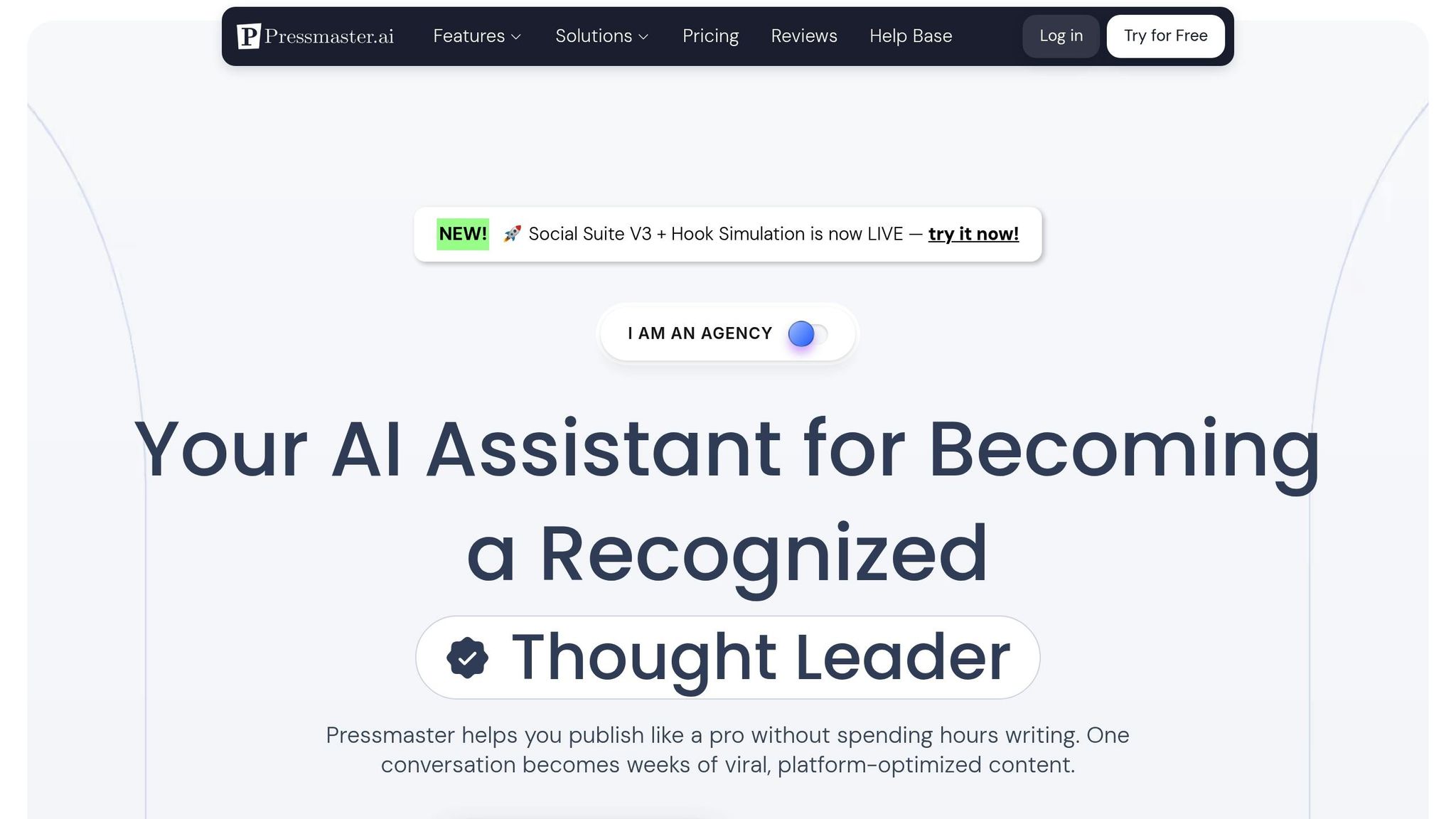
Pressmaster.ai takes personalized content creation to the next level by offering platform-specific tools that produce consistent, on-brand content - perfectly tailored to your audience.
Matching Your Brand's Voice and Style
One of the key challenges with AI-generated content is making it sound human while staying true to your brand's identity. Pressmaster.ai tackles this by replicating your brand's tone, vocabulary, and style through its Expertise Interview process. This feature analyzes your existing writing, ensuring all content aligns with your preferred communication style, including U.S. spelling and references.
The "Pin Your Thoughts" tool adds another layer of convenience. It transforms content you already have - like YouTube videos, articles, or podcasts - into fresh, brand-consistent materials, saving you time while keeping your messaging cohesive.
Smarter Content Ideas and Planning
Creating personalized content isn't just about tone; it’s also about timing and relevance. Pressmaster.ai's AI Strategizer uses audience behavior data and proven content frameworks to generate ideas tailored to your target audience. Its Trendmaster feature scans over 500,000 sources daily, identifying emerging topics weeks before they peak. This gives you a head start on crafting timely, engaging content.
And before you hit publish, the Hook Engineering & Performance Simulation tool lets you test your ideas. It analyzes potential audience reactions, emotional triggers, and scrolling behavior, helping you fine-tune your content for maximum impact.
Once your content is live, tracking its performance is the next critical step.
Tracking Engagement with Unified Analytics
To measure how well your personalized content performs, Pressmaster.ai provides a unified analytics dashboard. This tool pulls data from all your channels into one place, tracking engagement metrics like click-through rates, time on page, social shares, and conversions. Real-time insights allow you to tweak your tone, format, or topics to keep your audience engaged.
By combining these insights with its other tools, Pressmaster.ai ensures your content strategy delivers measurable results.
Real-World Success Stories
Pressmaster.ai’s personalization tools have already proven their value for businesses. For example, a U.S.-based PR firm used the platform to automate press release creation while staying on-brand, leading to a 30% increase in media pickups. Similarly, a retail marketer used audience segmentation and analytics to craft highly personalized email campaigns, boosting open rates by 25%.
"Pressmaster.ai helped us maintain our brand's unique voice across all channels, saving hours of manual editing and increasing our audience engagement."
- Jane Smith, Head of Content at a U.S. marketing agency
"The AI strategizer's tailored content ideas and analytics dashboard gave us the insights we needed to refine our messaging and connect more authentically with our clients."
- Tom Lee, PR Director
These results highlight how blending AI-powered efficiency with thoughtful personalization can lead to tangible business growth. In fact, a study by IBM found that 71% of consumers expect companies to deliver personalized content, and businesses using advanced personalization strategies can see up to 40% more revenue compared to traditional approaches [1].
Best Practices for Editing and Improving AI-Generated Content
Even though tools like Pressmaster.ai can generate personalized content, human oversight is crucial to ensure it feels genuine. While AI is great at creating initial drafts and maintaining consistency, refining that content into something that truly resonates with your audience requires a human touch.
Editing transforms AI's raw output into content that reflects the authentic voice central to your strategy. Research shows that many consumers expect personalized, genuine communication, and they can quickly pick up on content that feels robotic. Strategic editing bridges the efficiency of AI with the emotional connection only humans can provide.
Editing for Tone and Connection
The first step in improving AI-generated content is making sure the tone matches your audience's expectations and aligns with your brand's personality. AI often produces technically accurate content, but it can lack the emotional depth needed to create meaningful connections.
Reading the content out loud can help you identify awkward phrasing, clunky transitions, or overly formal language that might not suit your brand[1]. Pay attention to sentences that sound stiff or disconnected from your audience's conversational style.
Tailor the vocabulary and structure to include subtle emotional cues that resonate with your target audience. For instance, if you're addressing young professionals, use conversational language and references that feel relevant to their experiences. For executives, maintain a polished tone while weaving in personal touches that show you understand their challenges.
AI typically presents information in a neutral manner, but authentic content often requires emotional elements like empathy or enthusiasm. Adding these elements where appropriate helps reflect the human experience your audience expects.
Also, keep cultural and regional nuances in mind - something AI might overlook. For U.S. audiences, this means using American spelling, referencing familiar cultural moments, and incorporating colloquialisms that feel natural and relatable.
Making AI Writing Less Predictable
AI-generated content can sometimes feel repetitive or formulaic. To counter this, introduce variety and creativity that mirrors natural human communication while staying consistent with your brand's tone.
Mix up sentence lengths and use creative transitions, such as rhetorical questions or short anecdotes, to keep the content engaging[1]. AI often generates sentences of similar length, which can create a monotonous rhythm. Alternating between short, impactful sentences and longer, more detailed ones can make the text flow more naturally.
To make the writing feel more human, add personal touches like parenthetical remarks, casual asides, or small tangents that add character without straying from the main message. These elements signal human thought and creativity rather than algorithm-driven output.
Replace common metaphors or analogies with more vivid and unexpected comparisons. For example, if the AI suggests a cliché metaphor, think of a fresh analogy that better captures your audience’s attention while still conveying the intended meaning[1].
Incorporate idiomatic expressions and industry-specific terms that your readers will connect with. This not only shows expertise but also creates a sense of shared understanding that generic AI content often lacks.
Building Trust Through Fact-Checking
Accuracy is the backbone of credible content, and AI-generated material must be thoroughly fact-checked to maintain reliability. Even advanced AI tools can include outdated information, misunderstand data, or draw incorrect conclusions.
Double-check all statistics, dates, and names using reliable, up-to-date sources. Ensure that companies, products, or individuals mentioned are accurately represented before publishing.
Update any time-sensitive details to reflect current realities. AI training data may include historical information that’s no longer relevant, so reviewing market trends, regulations, and industry updates is essential.
Lastly, scrutinize logical connections for accuracy. While AI is skilled at recognizing patterns, it can sometimes imply relationships that don’t actually exist. Use critical thinking to confirm the validity of every claim.
Thorough editing not only ensures accuracy but also builds audience trust. Organizations that prioritize high standards for accuracy and authenticity often see better engagement and loyalty. In fact, companies using advanced personalization strategies report 40% higher revenue[1], highlighting the value of careful human oversight.
Conclusion: Making the Most of Personalized AI Content
Personalized AI content blends efficiency with human creativity, resulting in experiences that genuinely connect with audiences. Throughout this guide, we’ve seen how successful personalization requires a mix of advanced tools and thoughtful human involvement.
Consider this: companies applying advanced AI personalization strategies see 40% higher revenue compared to those sticking with traditional methods[1][2]. And with 71% of consumers now expecting brands to deliver personalized experiences[1], the real question isn’t whether to use AI-driven personalization - but how to do it effectively while keeping it authentic.
Here’s the bottom line: AI is your creative partner, not a replacement. While AI can process massive amounts of data and produce drafts at scale, it’s human creativity that adds emotional depth and authenticity. This collaboration becomes even more essential as we move toward dynamic micro-personalization, where real-time data creates hyper-specific, individualized experiences[1].
Tools like Pressmaster.ai showcase how this balance works in practice. By offering features like brand voice replication, AI-powered strategy, and conversational inputs, Pressmaster.ai helps transform your ideas into content that stays true to your brand and feels unmistakably human. It’s a clear example of how combining AI’s strengths with a human touch can produce highly personalized content.
Looking ahead, advancements in emotional intelligence within AI and predictive personalization will push the boundaries of what’s possible. But one thing remains constant: the most effective content will always merge AI’s analytical capabilities with human insight into emotion, context, and connection.
Success in this space requires flexibility - an ongoing process of reviewing performance, staying updated on personalization trends, and balancing automation with human oversight. By doing this and using tools designed to maintain your authentic voice, you can create content that not only feels tailored but also deeply resonates with your audience. AI-driven personalization isn’t just a trend; it’s a powerful way to forge meaningful connections.
FAQs
How can I make AI-generated content feel personal and authentic?
To create AI-generated content that feels genuine and relatable, begin by establishing a clear tone and style that mirrors your brand's identity. Give the AI precise instructions, including key phrases, keywords, or examples, to help shape its output so it matches your brand's voice.
Once the content is generated, take the time to review and tweak it. Simple adjustments - like weaving in personal anecdotes or using a conversational tone - can make the content feel more human. The key is blending AI's speed and precision with your individual perspective to strike the right balance.
How can I gather and use audience data to create more personalized AI-driven content?
To make AI-generated content feel personal and relatable, start by gathering detailed audience insights. Look into demographics, preferences, and behavior patterns using tools like surveys, website analytics, and social media data. The key is understanding what matters most to your audience.
With this information in hand, you can create tailored content. For instance, divide your audience into groups with similar interests or needs and craft messages that address their unique concerns. AI tools can assist by analyzing this data and producing content that resonates with each group, making your communication more engaging and relevant.
It's important to handle audience data responsibly and ensure that your content remains genuine and focused on creating a human connection.
How does Pressmaster.ai ensure your brand's voice stays consistent when creating AI-powered content?
Pressmaster.ai is built to align with your brand's specific tone, style, and values. It picks up on the subtleties of your voice to produce content that feels personalized and naturally fits your messaging. This approach ensures every piece of content mirrors your brand's identity, strengthening trust and keeping your connection with your audience genuine.








Sign Up for our Pressmaster Newsletter
Sign up for our Pressmaster.ai newsletter to get instant alerts on trending topics, ensuring you stay ahead in your field with the latest insights and updates.


.avif)
.png)

.avif)


7 Viral Patterns That Drove 10,643% Growth
Turn natural conversations into content gold, make every insight count, and drive real conversations.

Please fill out the form to get our Viral Cheat Sheet


How to Become a Thought Leader in 6 Easy Steps
Increase your visibility, establish authority, and conquer your market with minimal effort.

Please fill out the form to get our PDF Checklist
